Creating an Effective Program to Advance Transportation System Management and Operations
Primer
Figure 3 Long Description
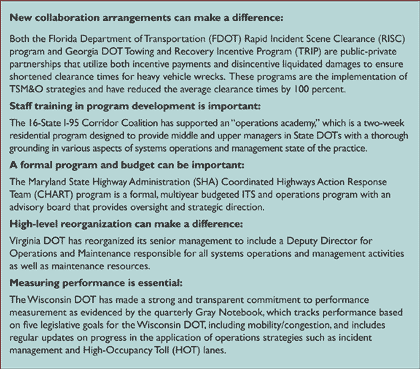
Example descriptions of agencies moving towards comprehensive transportation systems management and operations programs.
New collaboration arrangements can make a difference:
Both the Florida Department of Transportation (FDOT) Rapid Incident Scene Clearance (RISC) program and Georgia DOT Towing and Recovery Incentive Program (TRIP) are public-private partnerships that utilize both incentive payments and disincentive liquidated damages to ensure shortened clearance times for heavy vehicle wrecks. These programs are the implementation of TSM&O strategies and have reduced the average clearance times by 100 percent.
Staff training in program development is important:
The 16-State I-95 Corridor Coalition has supported an “operations academy,” which is a two-week residential program designed to provide middle and upper managers in State DOTs with a thorough grounding in various aspects of systems operations and management State of the practice.
A formal program and budget can be important:
The Maryland SHA Coordinated Highways Action Response Team (CHART) program is a formal, multiyear budgeted ITS and operations program with an advisory board that provides oversight and strategic direction.
High-level reorganization can make a difference:
Virginia DOT has reorganized its senior management to include a Deputy Director for Operations and Maintenance responsible for all systems operations and management activities as well as maintenance resources.
Measuring performance is essential:
WisDOT has made a strong and transparent commitment to performance measurement as evidenced by the quarterly Gray Notebook, which tracks performance based on five legislative goals for WisDOT, including mobility/congestion, and includes regular updates on progress in the application of operations strategies such as incident management and HOT lanes.






