Slide 1:
FUTURE DIRECTIONS FOR MULTI-STATE/JURISDICTIONAL DECISION MAKING
Christine Johnson, Director
FHWA Operations Core Business Unit
Slide 2:
Tuesday Charges
Ø Yesterday we covered existing coalitions
Ø Discussed the positive aspects and challenges for these arrangements.
Ø Today we will explore future directions
Ø I have some ideas to share
Ø Be creative in your deliberations today
Ø Remember the customer and the end to end focus.
Ø Demands multi-jurisdictional, intermodal & public/private collaboration.
Slide 3:
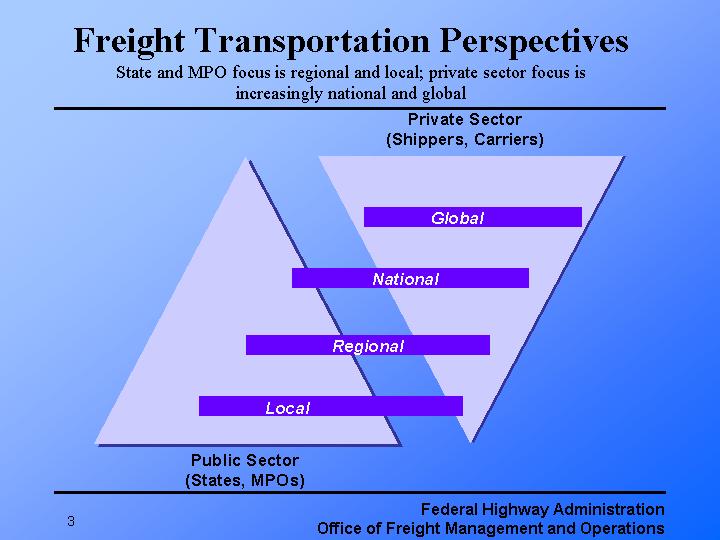
Freight Transportation Perspectives
State and MPO focus is regional and local; private sector focus is increasingly
national and global
Slide 4:
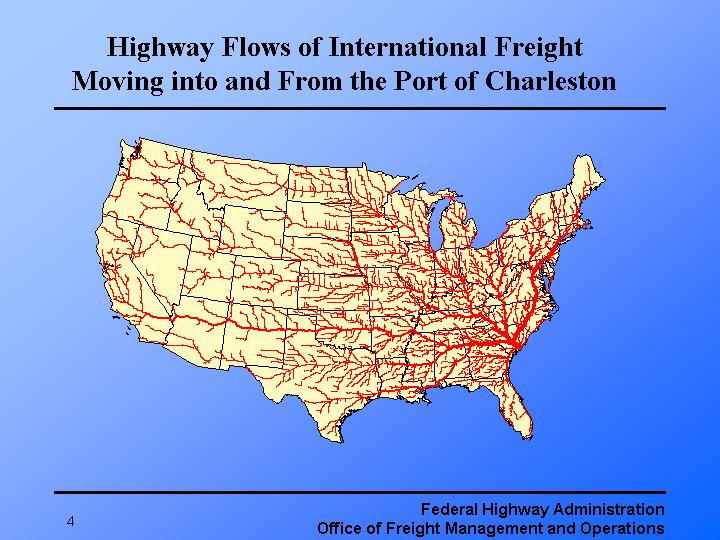
Highway Flows of International Freight Moving into and From the Port of Charleston
Slide 5:
Future Directions
What should the future look like for Multi-State/Jurisdictional coalitions as
we consider Reauthorization?
Continue Ad Hoc
Federal enabling of coalitions
Directing Creation of coalitions
Cross Cutting Issues
Intermodal focus for coalitions
Private and public investment in coalitions
Slide 6:
Ad Hoc Coalitions
Encourage, support, and provide leadership for states and other transportation
interests to continue ad hoc arrangements.
Support creation of multi-jurisdictional coalitions on a systematic basis.
Work with States and MPO’s to advance coalitions
Provide data/analytical support
Continue pooled fund arrangements with SPR.
Pro-actively create International Coalitions to address international trade/transportation
issues
Slide 7:
Ad Hoc Approach
Pros
Do not need congressional authority
Work within existing frameworks already understood
No new sources of funding required
No new institutional considerations
Cons
No specific funding provided
Difficulty in sustaining coalitions beyond planning phase
Increase in time to complete needed improvements
Slide 8:
Enabling Coalitions
Creating Coalitions through partnering
Request Congressional enabling authority
Provide Seed Money for coalitions
Establish Coalitions with state and local stakeholders
Program guidelines from USDOT
Slide 9:
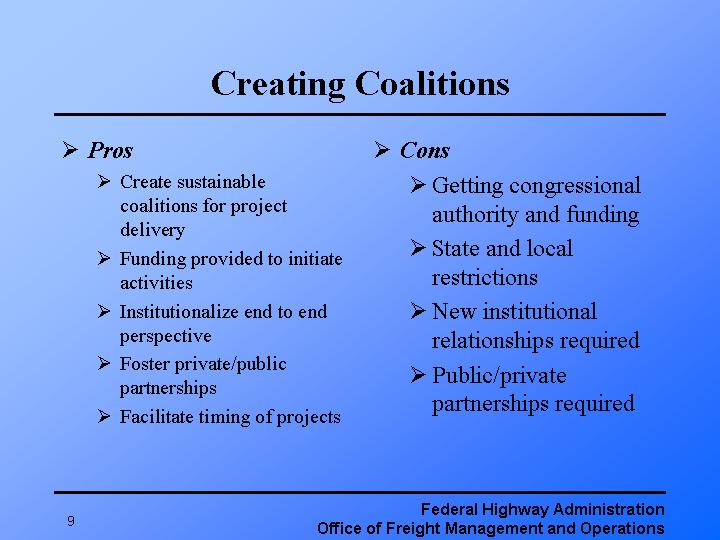
Creating Coalitions
Pros
Create sustainable coalitions for project delivery
Funding provided to initiate activities
Institutionalize end to end perspective
Foster private/public partnerships
Facilitate timing of projects
Cons
Getting congressional authority and funding
State and local restrictions
New institutional relationships required
Public/private partnerships required
Slide 10:
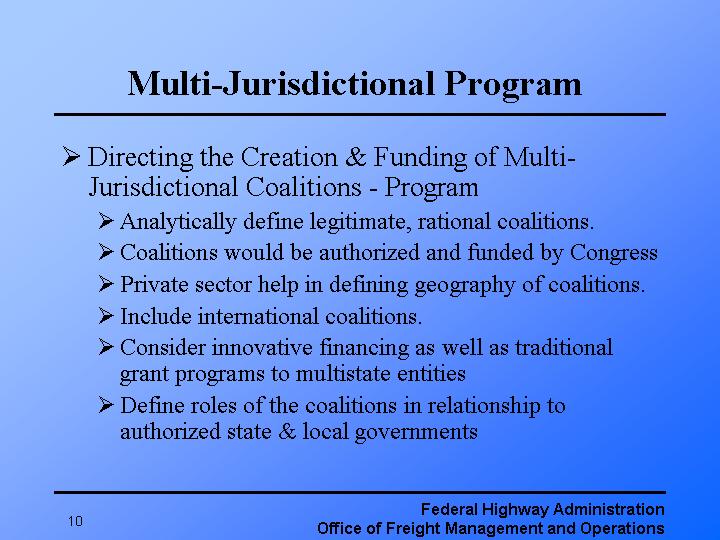
Multi-Jurisdictional Program
Directing the Creation & Funding of Multi-Jurisdictional Coalitions - Program
Analytically define legitimate, rational coalitions.
Coalitions would be authorized and funded by Congress
Private sector help in defining geography of coalitions.
Include international coalitions.
Consider innovative financing as well as traditional grant programs to multistate
entities
Define roles of the coalitions in relationship to authorized state & local
governments
Slide 11:
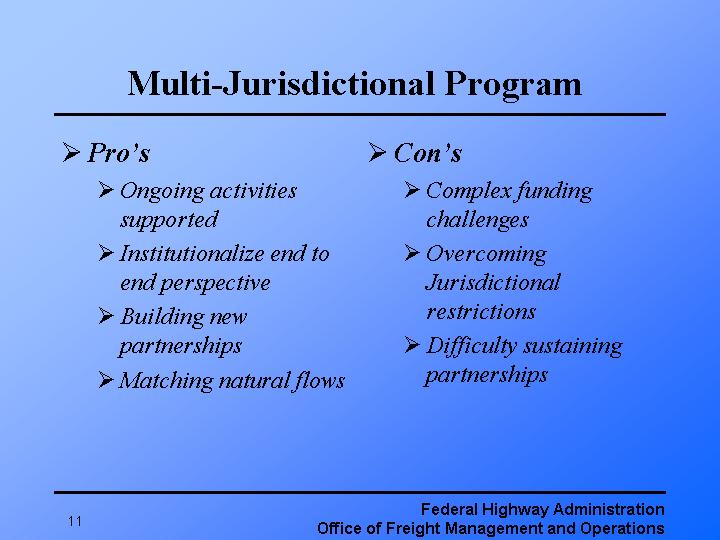
Multi-Jurisdictional Program
Pro’s
Ongoing activities supported
Institutionalize end to end perspective
Building new partnerships
Matching natural flows
Con’s
Complex funding challenges
Overcoming Jurisdictional restrictions
Difficulty sustaining partnerships

Slide 12:
Cross Cutting Issues
Slide 13:
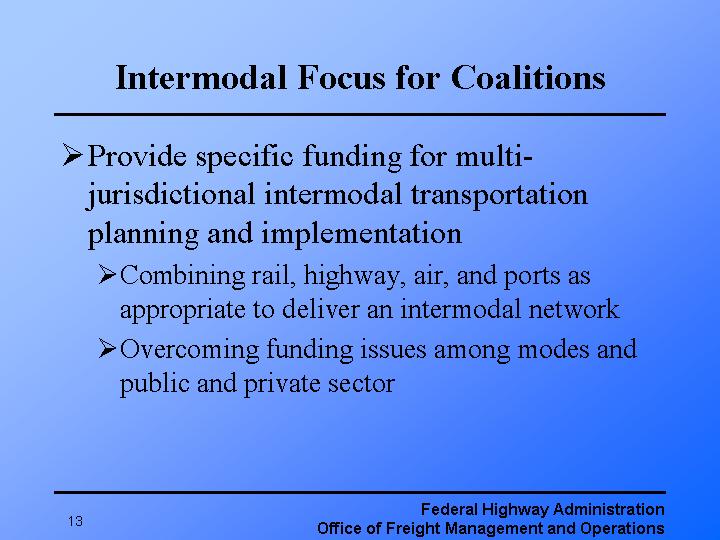
Intermodal Focus for Coalitions
Provide specific funding for multi-jurisdictional intermodal transportation
planning and implementation
Combining rail, highway, air, and ports as appropriate to deliver an intermodal
network
Overcoming funding issues among modes and public and private sector
Slide 14:
Intermodal Focus
Pros
Ability to address end to end needs
Some of the plans would get built
Deliver the best transportation network to customers
Cons
Current Funding limitations
Jurisdictional issues across modes
State and local restrictions
Slide 15:
Private and Public Investment
How should private and public sector funding be brought together?
Consider public investment in private sector facilities – calculate public
benefits
Private and public sector merging funds to plan & implement decisions.
Engaging the private sector in the decision-making
Slide 16:
Public and Private Investment
Pros
Ability to fund more improvements with cost sharing
Private sector perspective included
Positive impact on timing of projects
Cons
Can face state and local restrictions
Public funds viewed as having “strings” attached
Difficult to engage the private sector
Public sector timing is not compatible with private sector demands
Slide 17:
Anything Goes