Slide 1:
Transportation Planning Process
Freight Transportation Planning Workshop
July 11, 2001
Slide 2:
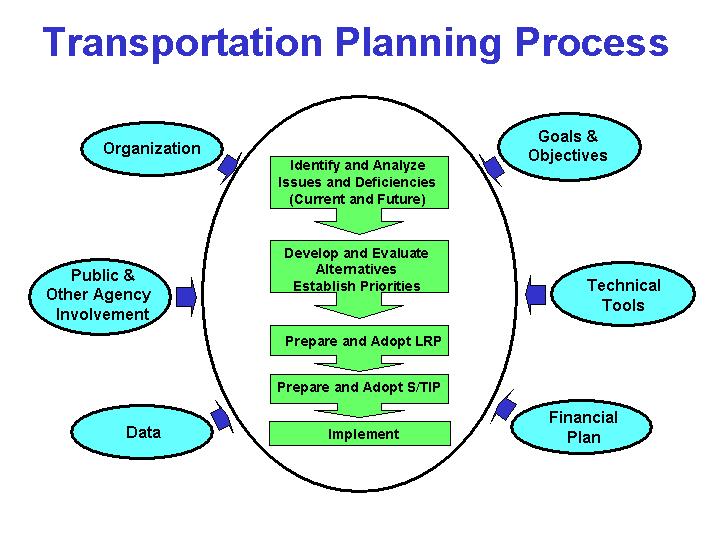
Transportation Planning Process
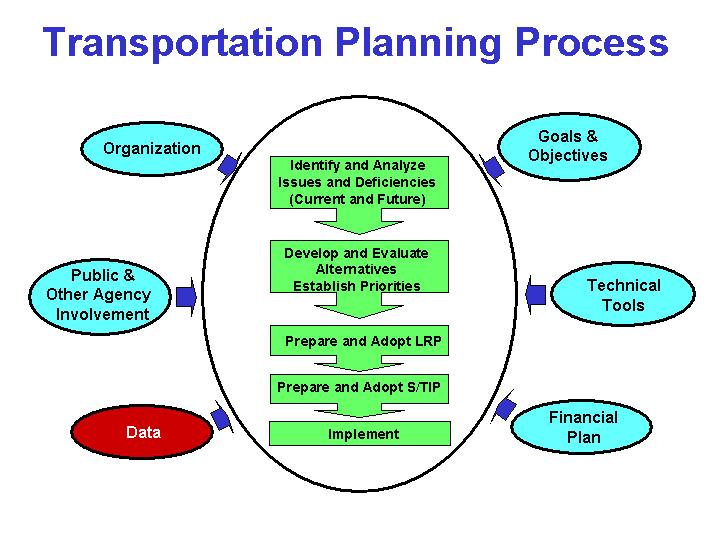
• Overview of transportation planning process
• Explanation of each step in process and connections
• Think about process improvements to enhance consideration of freight
Slide 3:
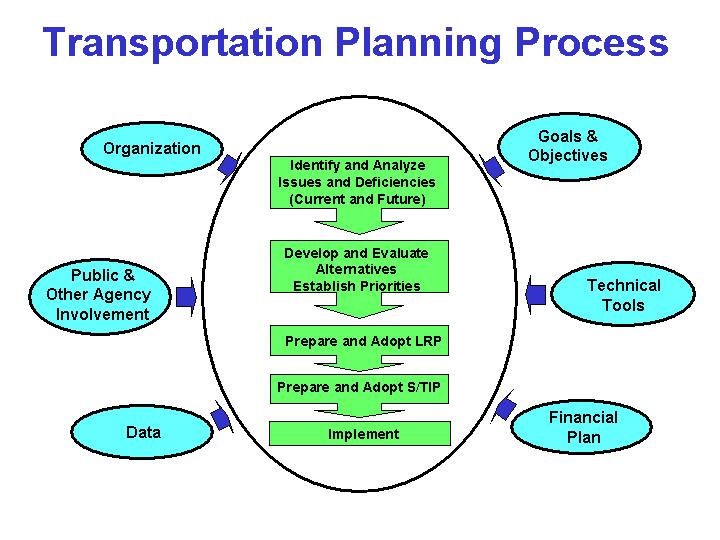
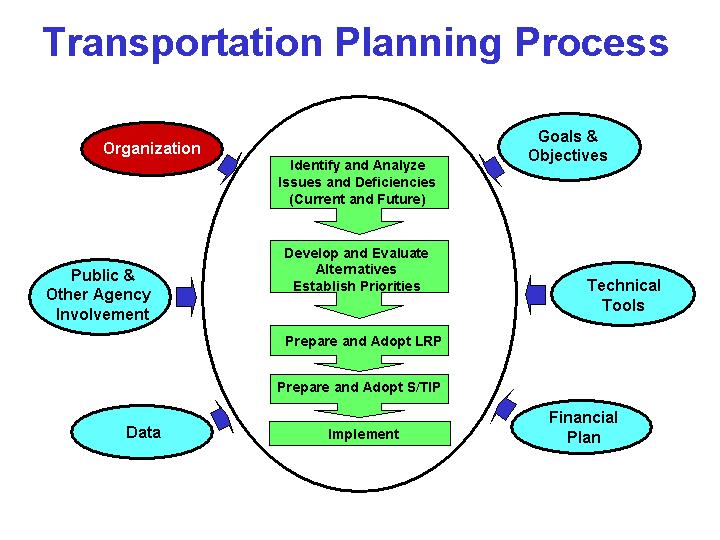
Transportation Planning Process
Slide 4:
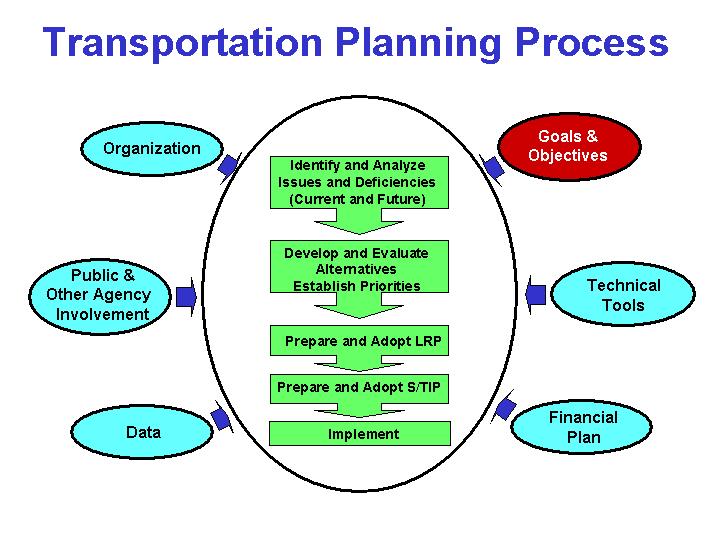
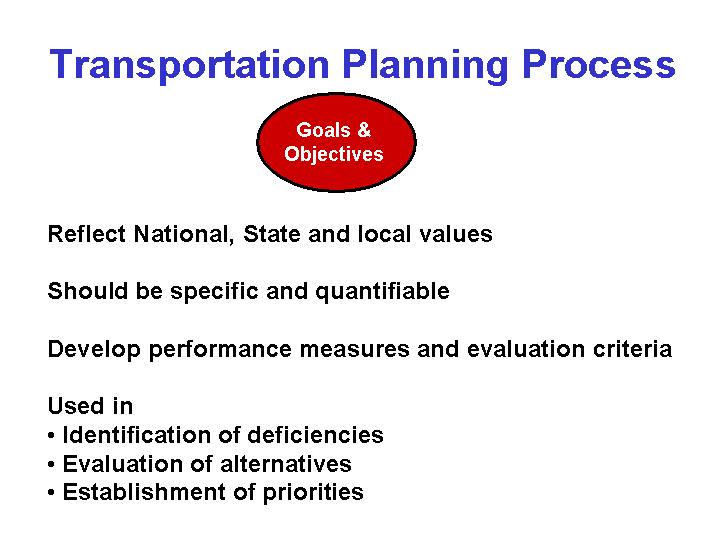
Transportation Planning Process-Goals & Objectives
Slide 5:
Transportation Planning Process- Goals & Objectives
Reflect National, State and local values
Should be specific and quantifiable
Develop performance measures and evaluation criteria
Used in
• Identification of deficiencies
• Evaluation of alternatives
• Establishment of priorities
Slide 6:
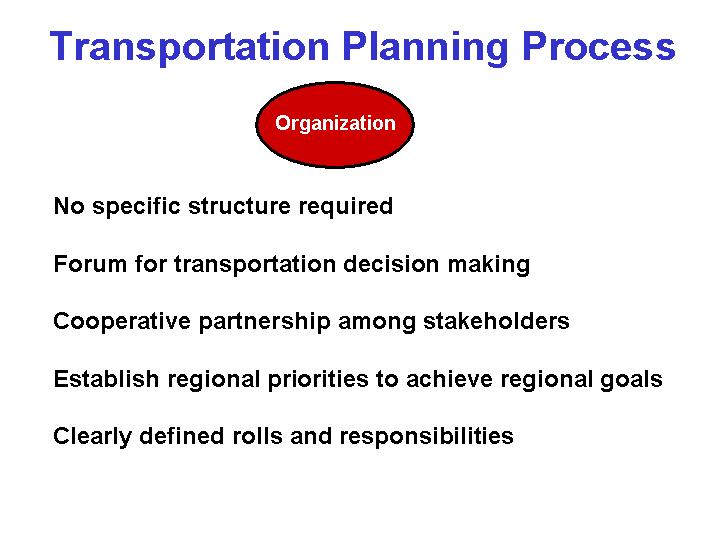
Transportation Planning Process-Organization
Slide 7:
Transportation Planning Process-Organization
No specific structure required
Forum for transportation decision making
Cooperative partnership among stakeholders
Establish regional priorities to achieve regional goals
Clearly defined rolls and responsibilities
Slide 8:
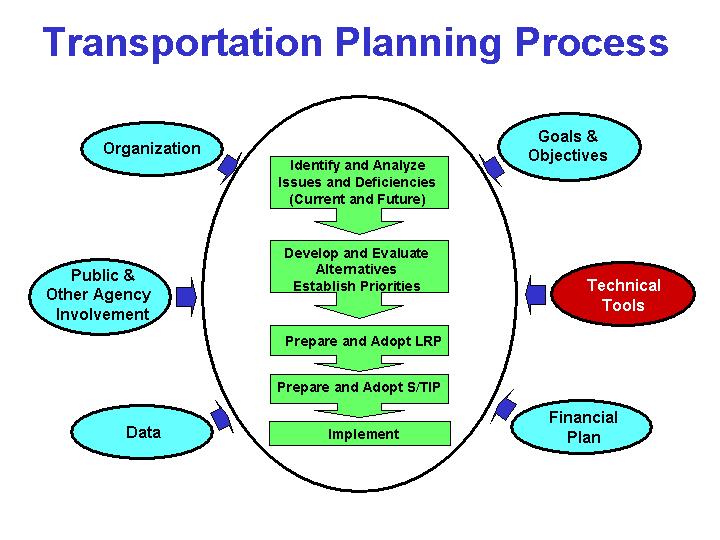
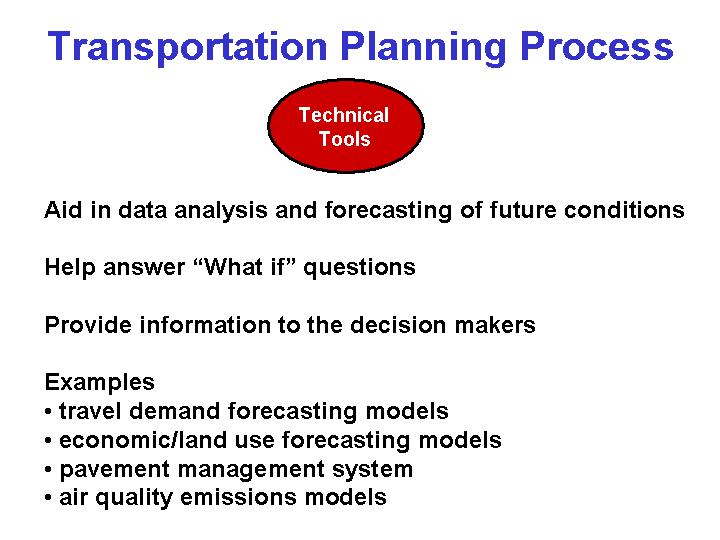
Transportation Planning Process-Technical tools
Slide 9:
Transportation Planning Process-Technical tools
Aid in data analysis and forecasting of future conditions
Help answer “What if” questions
Provide information to the decision makers
Examples
• travel demand forecasting models
• economic/land use forecasting models
• pavement management system
• air quality emissions models
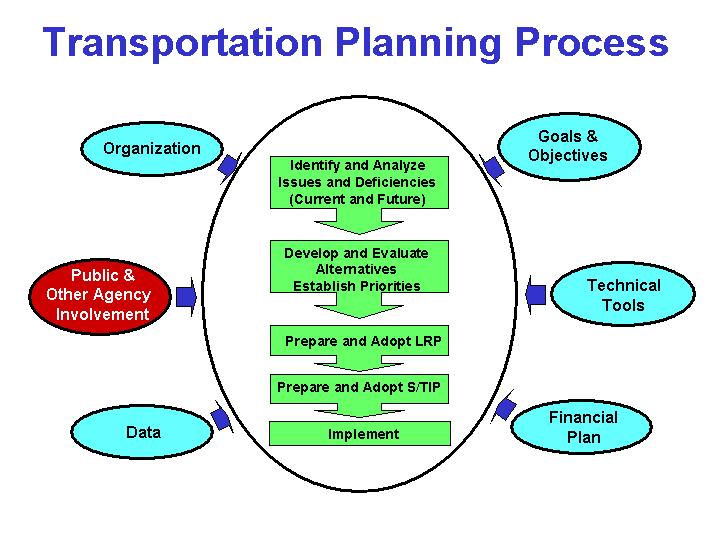
Slide 10:
Transportation Planning Process-Public & other agency involvement
Slide 11:
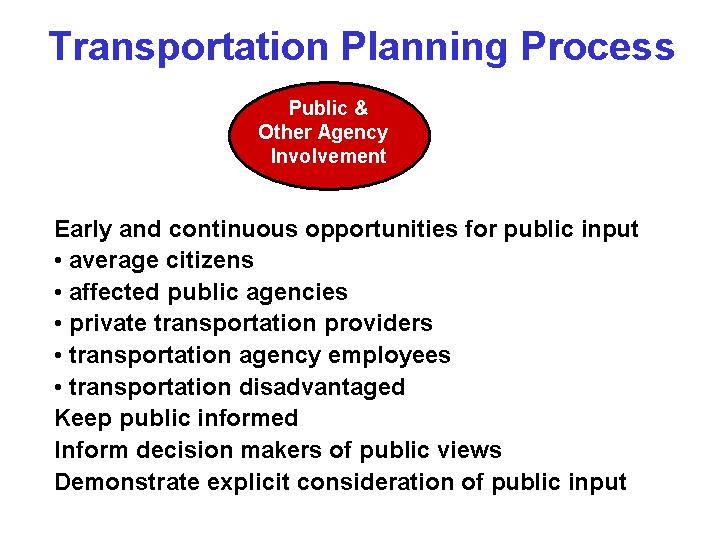
Transportation Planning Process-Public & other agency involvement
Early and continuous opportunities for public input
• average citizens
• affected public agencies
• private transportation providers
• transportation agency employees
• transportation disadvantaged
Keep public informed
Inform decision makers of public views
Demonstrate explicit consideration of public input
Slide 12:
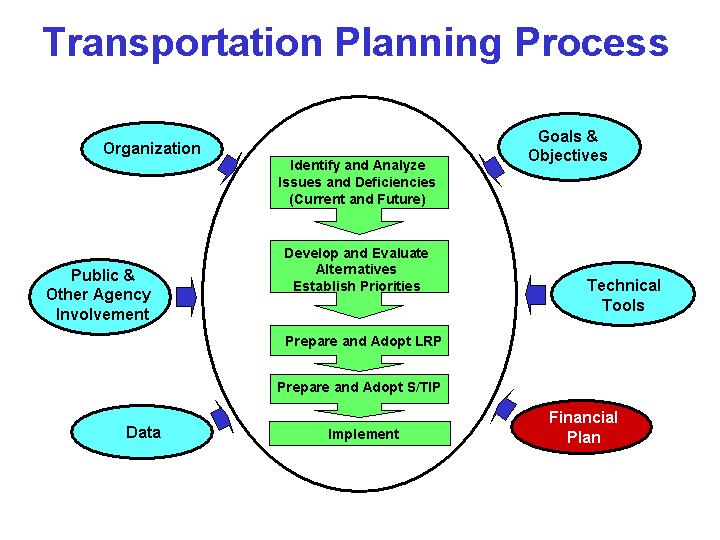
Transportation Planning Process-Financial plan.
Slide 13:
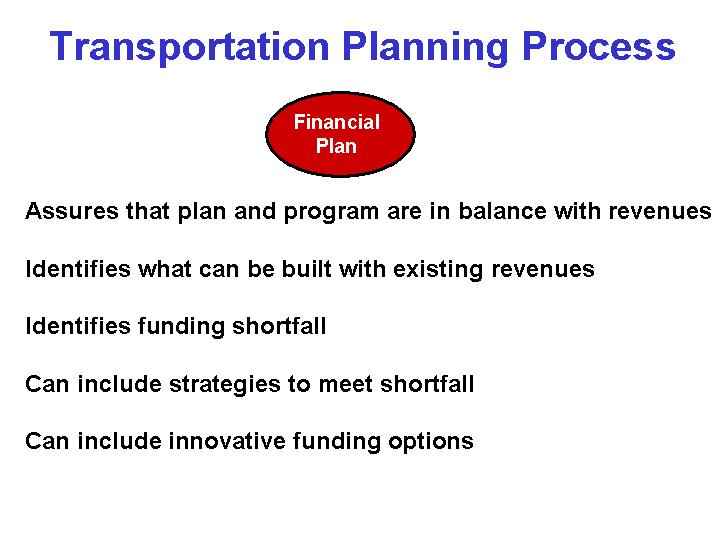
Transportation Planning Process-Financial plan
Assures that plan and program are in balance with revenues
Identifies what can be built with existing revenues
Identifies funding shortfall
Can include strategies to meet shortfall
Can include innovative funding options
Slide 14:
Transportation Planning Process-Data
Slide 15:
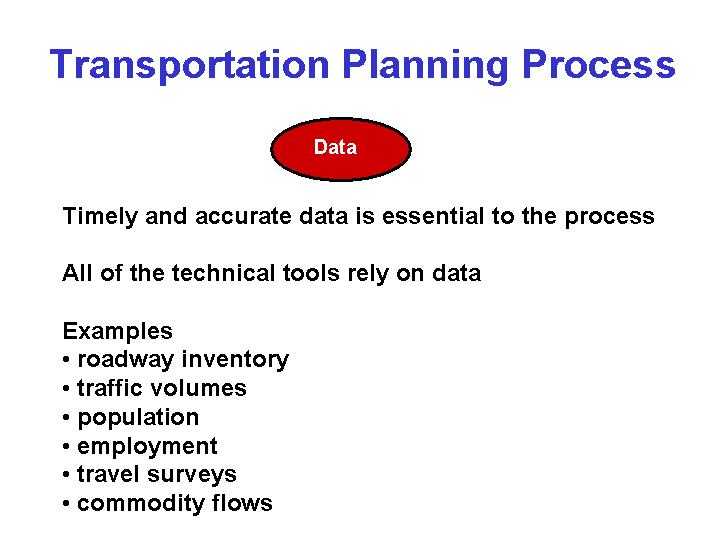
Transportation Planning Process-Data
Timely and accurate data is essential to the process
All of the technical tools rely on data
Examples
• roadway inventory
• traffic volumes
• population
• employment
• travel surveys
• commodity flows
Slide 16:
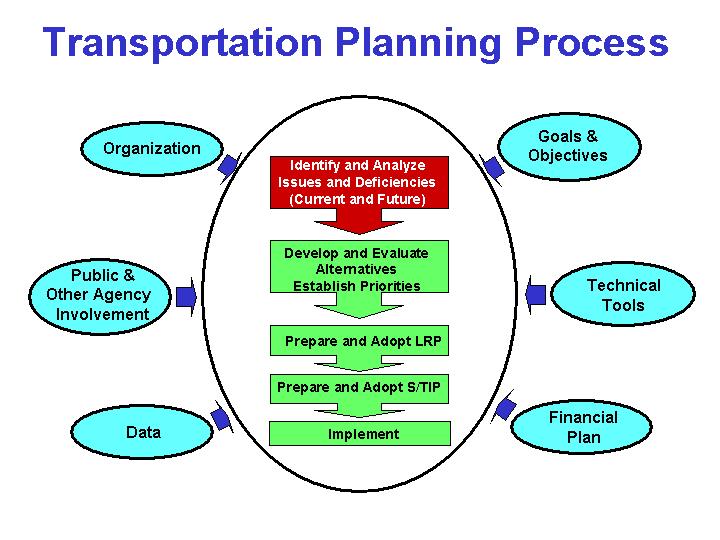
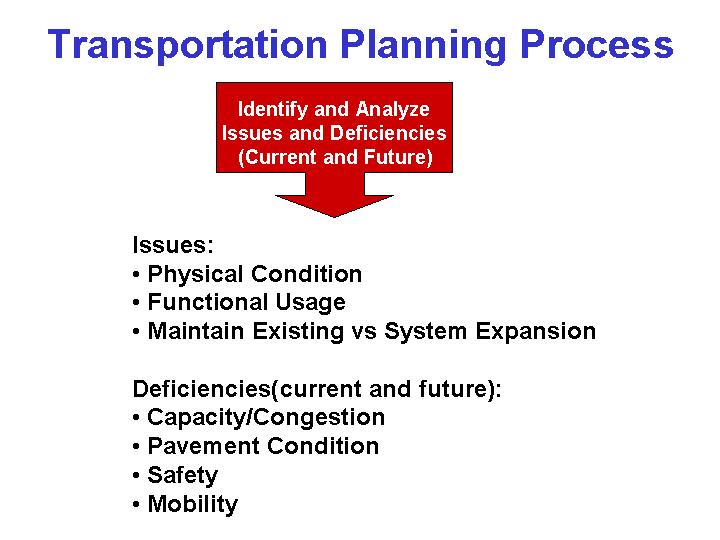
Transportation Planning Process-Identify and analyze issues and deficiencies(current and future)
Slide 17:
Transportation Planning Process-Identify and analyze issues
and deficiencies(current and future)
Issues:
• Physical Condition
• Functional Usage
• Maintain Existing vs System Expansion
•Deficiencies(current and future):
• Capacity/Congestion
• Pavement Condition
• Safety
• Mobility
Slide 18:
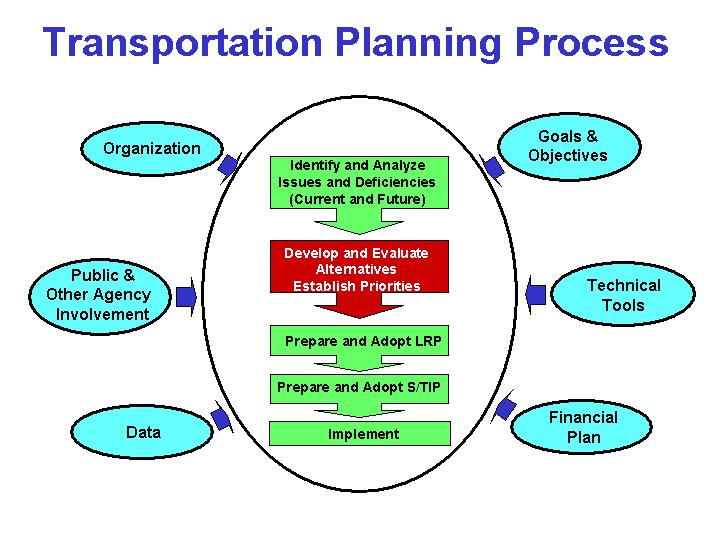
Transportation Planning Process-Develop and evaluate alternatives establish priorities

Slide 19:
Transportation Planning Process-Develop and evaluate alternatives
establish priorities
Develop Alternative Solutions
Evaluate Sets of Solutions
• Consistent with Revenues
• Using Goals and Objectives
Establish Preliminary Priorities
Slide 20:
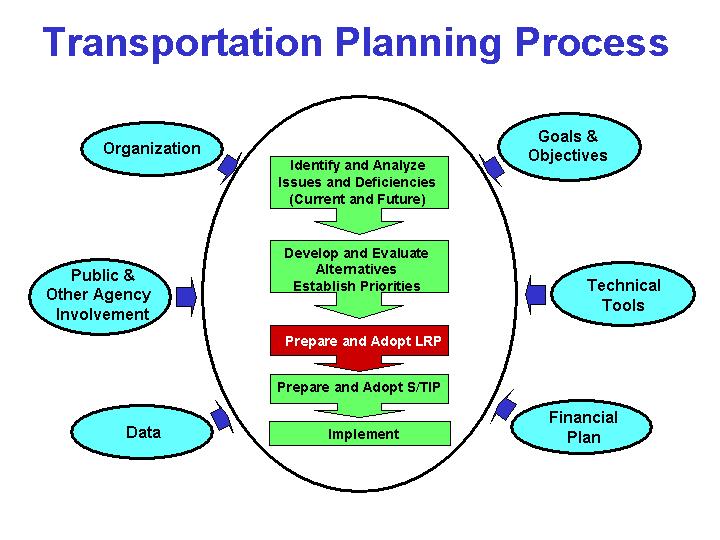
Transportation Planning Process-Prepare and adopt LRP
Slide 21:
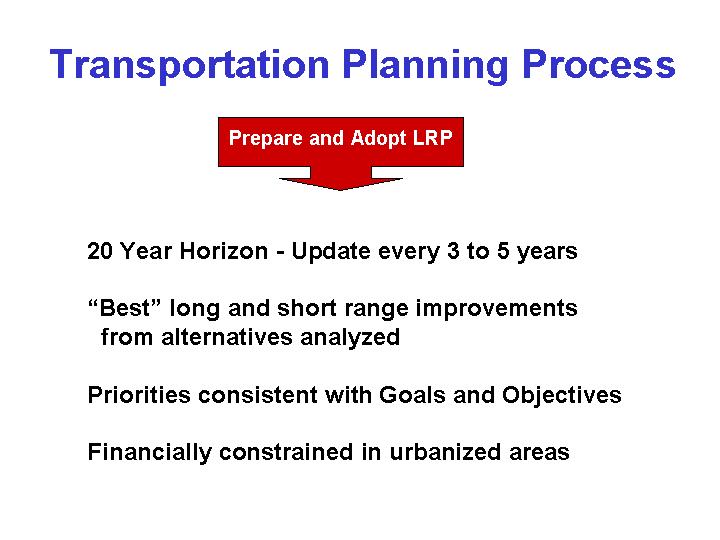
Transportation Planning Process-Prepare and adopt LRP
20 Year Horizon - Update every 3 to 5 years
“Best” long and short range improvements
from alternatives analyzed
Priorities consistent with Goals and Objectives
Financially constrained in urbanized areas
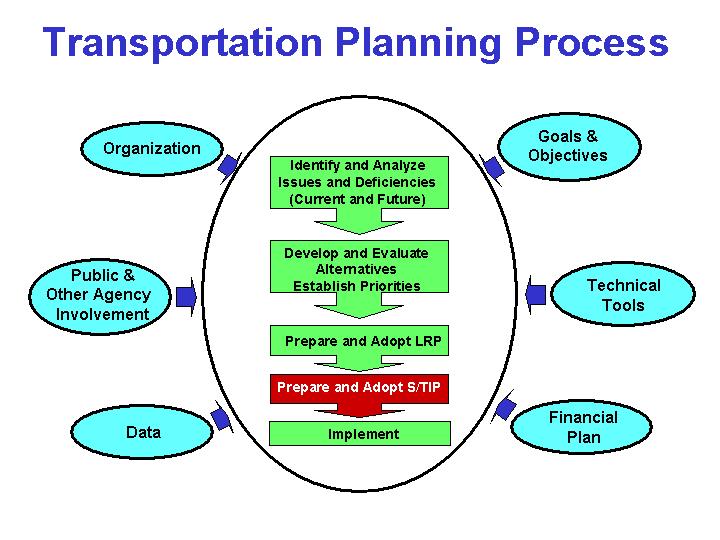
Slide 22:
Transportation Planning Process-Prepare and adopt S/TIP
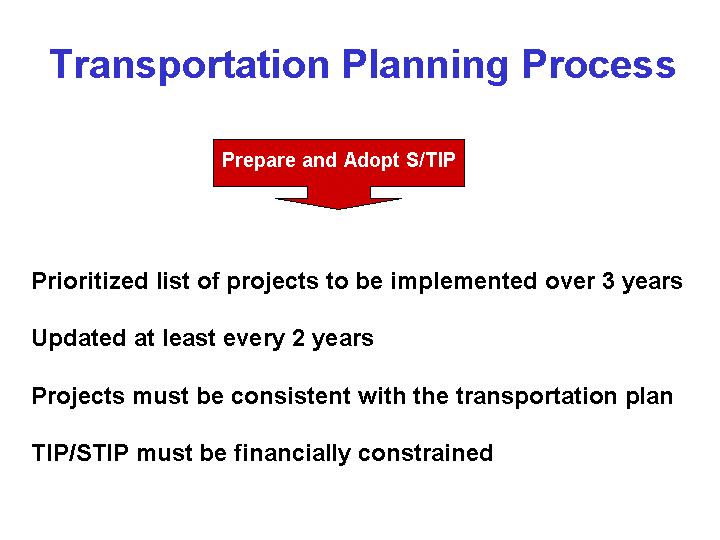
Slide 23:
Transportation Planning Process-Prepare and adopt S/TIP
Prioritized list of projects to be implemented over 3 years
Updated at least every 2 years
Projects must be consistent with the transportation plan
TIP/STIP must be financially constrained
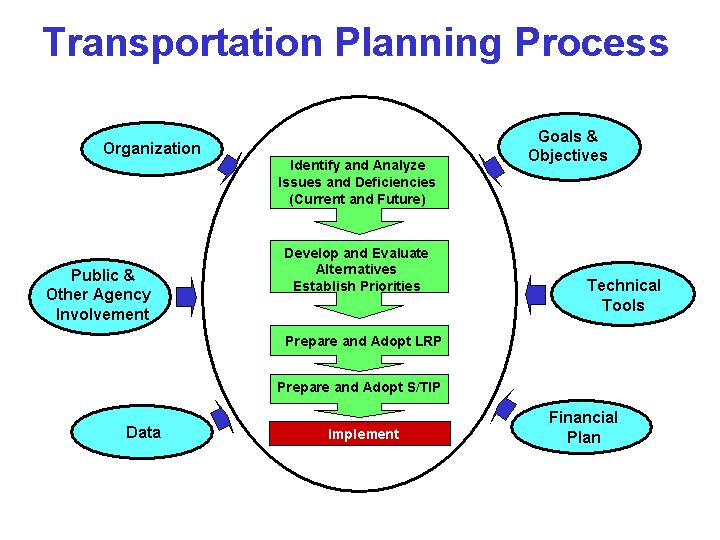
Slide 24:
Transportation Planning Process-Implement
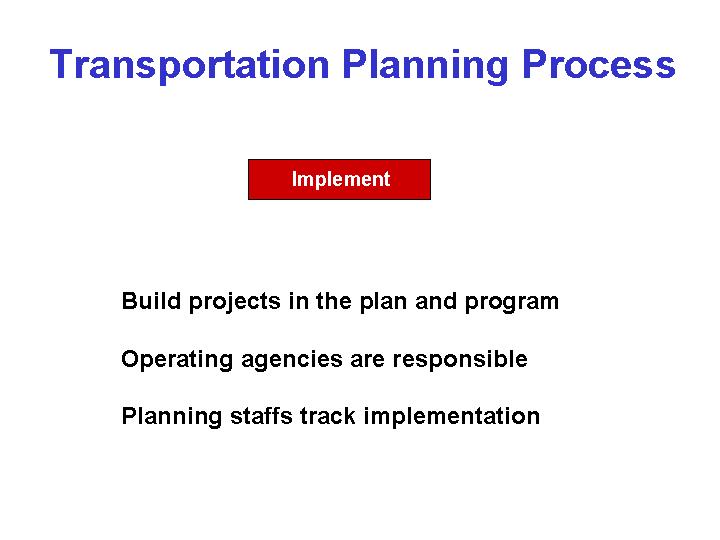
Slide 25:
Transportation Planning Process-Implement
Build projects in the plan and program
Operating agencies are responsible
Planning staffs track implementation
Slide 26:
Transportation Planning Process
Slide 27:
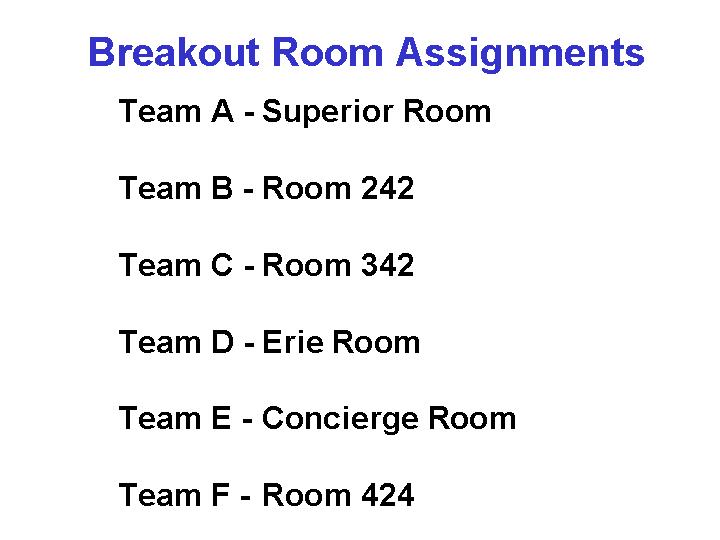
Breakout Room Assignments
Team A - Superior Room Team B - Room 242 Team C - Room 342 Team D - Erie Room
Team E - Concierge Room Team F - Room 424