United States Department of Transportation - Federal Highway Administration FHWA Home Feedback

2.0  Criteria for Selecting the Appropriate Type of Traffic Analysis Tool

This section identifies criteria that can be considered in the selection of an appropriate traffic analysis tool and helps identify under what circumstances a particular tool should be used. Section 3.0 of this document contains guidance on how to use this information to select the appropriate tool.

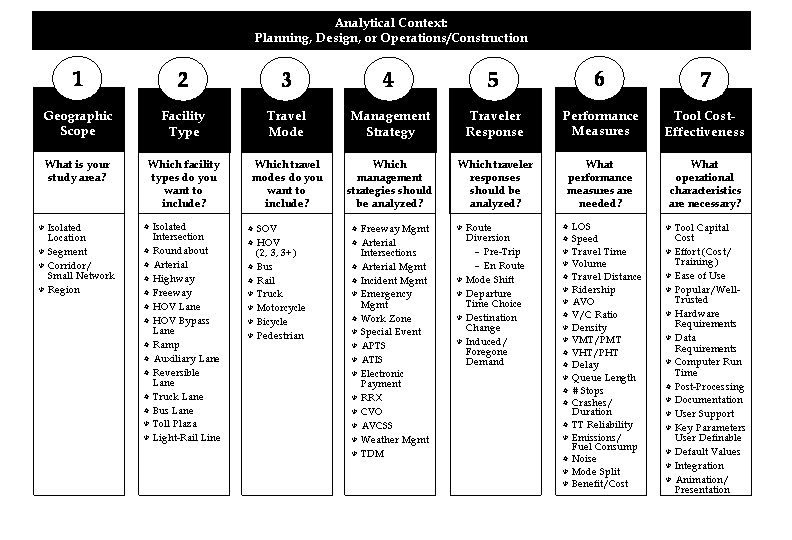
Sections 2.1 and 2.2 present the criteria a user should consider when selecting a type of traffic analysis tool. The first step is identification of the analytical context for the task: planning, design, or operations/construction. Seven additional criteria are necessary to help identify the analytical tools that are most appropriate for a particular project. Depending on the analytical context and the project's goals and objectives, the relevance of each criterion may differ. The criteria include:

  1. Ability to analyze the appropriate geographic scope or study area for the analysis, including isolated intersection, single roadway, corridor, or network.
  2. Capability of modeling various facility types, such as freeways, high-occupancy vehicle (HOV) lanes, ramps, arterials, toll plazas, etc.
  3. Ability to analyze various travel modes, such as single-occupancy vehicle (SOV), HOV, bus, train, truck, bicycle, and pedestrian traffic.
  4. Ability to analyze various traffic management strategies and applications, such as ramp metering, signal coordination, incident management, etc.
  5. Capability of estimating traveler responses to traffic management strategies, including route diversion, departure time choice, mode shift, destination choice, and induced/foregone demand.
  6. Ability to directly produce and output performance measures, such as safety measures (crashes, fatalities), efficiency (throughput, volumes, vehicle-miles of travel (VMT)), mobility (travel time, speed, vehicle-hours of travel (VHT)), productivity (cost savings), and environmental measures (emissions, fuel consumption, noise).
  7. Tool/cost-effectiveness for the task, mainly from a management or operational perspective. Parameters that influence cost-effectiveness include tool capital cost, level of effort required, ease of use, hardware requirements, data requirements, animation, etc.

Each analytical tool category was evaluated against each criterion to identify whether or not a category of analytical tool was appropriate for use. This evaluation is presented in the form of matrices. In each matrix cell, a value has been assigned to each tool category according to its relevance or applicability to the corresponding criterion. A solid circle (Specific context is generally addressed by the corresponding analytical tool/methodology.) indicates that the particular tool category adequately addresses the criterion. An empty circle (The particular analytical tool/methodology does not generally address the specific context.) indicates that the traffic analysis tool category poorly addresses the specific criterion. A null symbol (Some of the analytical tools/methodologies address the specific context and some do not.) indicates that some tools within the tool category may address the criterion and others may not. Not applicable indicates that the particular tool category does not address the corresponding criterion at all and should not be used for the analysis.

Figure 2 summarizes the criteria that may be considered for the selection of a tool category.

Figure 2.  Criteria for selecting a traffic analysis tool category.  This figure shows the criteria that should be considered in the selection of a tool category for a particular project.  The first step is identification of the analytical context for the task:  planning, design, or operations/construction.  Seven additional criteria and their subcriteria are necessary to help identify the analytical tools that are most appropriate.

Figure 2. Criteria for selecting a traffic analysis tool category.

The steps for selecting the appropriate type of analytical tool are:

  1. Users should begin by identifying the project's analytical context (discussed in section 2.1).
  2. Next, users should filter through criteria 1 through 6 to limit the appropriate tool categories to one or two options (as discussed in sections 2.2.1 through 2.2.6).
  3. Finally, criterion 7 (tool/cost effectiveness) should be used to select the final tool category (presented in section 2.2.7) based on parameters outside of the technical context of the analysis, such as tool cost, training, hardware requirements, etc.

Step-by-step guidance for the tool selection process is presented in section 3.0. An automated tool that implements the guidance can be found at the FHWA Traffic Analysis Tools Web site at: http://ops.fhwa.dot.gov/Travel/Traffic_Analysis_Tools/traffic_analysis_toolbox.htm

Finally, a listing of available tools for each category and their Web site links are provided in section 4.0.

2.1 Analytical Context

The first step in selecting the appropriate type of traffic analysis tool is the identification of the analytical context of the project. Figure 2 illustrates a typical transportation analysis process, which contains several analytical phases, including:

Table 1 presents the general relevance of each tool category for each analytical context, including planning, design, and operations/construction.

Table 1. Relevance of traffic analysis tool categories with respect to analytical context.

Analytical Context

Analytical Tools/ Methodologies:
Sketch
Planning
Analytical Tools/ Methodologies:
Travel Demand Models
Analytical Tools/ Methodologies:
Analytical/ Deterministic Tools
(HCM-Based)
Analytical Tools/ Methodologies:
Traffic Optimization
Analytical Tools/ Methodologies:
Macroscopic Simulation
Analytical Tools/ Methodologies:
Mesoscopic Simulation
Analytical Tools/ Methodologies:
Microscopic Simulation
Planning
Specific context is generally addressed by the corresponding analytical tool/methodology.
Some of the analytical tools/methodologies address the specific context and some do not.
The particular analytical tool/methodology does not generally address the specific context.
Some of the analytical tools/methodologies address the specific context and some do not.
The particular analytical tool/methodology does not generally address the specific context.
Design
Not Applicable
Some of the analytical tools/methodologies address the specific context and some do not.
Specific context is generally addressed by the corresponding analytical tool/methodology.
Operations/ Construction
Some of the analytical tools/methodologies address the specific context and some do not.
The particular analytical tool/methodology does not generally address the specific context.
Specific context is generally addressed by the corresponding analytical tool/methodology.

Notes: Specific context is generally addressed by the corresponding analytical tool/methodology. Specific context is generally addressed by the corresponding analytical tool/methodology.
           Some of the analytical tools/methodologies address the specific context and some do not. Some of the analytical tools/methodologies address the specific context and some do not.
           The particular analytical tool/methodology does not generally address the specific context. The particular analytical tool/methodology does not generally address the specific context.
           Not Applicable: The particular methodology is not appropriate for use in addressing the specific context.

Notes and Assumptions: The role of these tools may vary according to the analytical context. For example, the use of simulation can differ considerably for planning versus operations. In planning, the system does not exist and modeling or simulation is necessary for analyzing alternatives. However, when considering traffic-responsive control measures for an existing system, real measurements should first be considered, while simulation plays a secondary role.

2.2 Criteria for Analytical Tool Selection and Assessment of Tool Capabilities

Criteria 1 through 7 from Figure 2 are discussed in the following sections, with the first six criteria focusing on the various technical aspects of the analysis (e.g., facility type, travel mode, management strategy, etc.), while criterion 7 helps to identify the best tool category from a management/operational perspective.

2.2.1 Study Area/Geographic Scope

Traffic analysis tools have varying degrees of capabilities with respect to the analytical environment and geographic scope of the project. Table 2 summarizes the general relevance of each tool category based on the study area/geographic scope appropriate for the task. Four types of study areas are included:

Table 2. Relevance of traffic analysis tool categories with respect to study area/geographic scope.

Analytical Context/
Geographic Scope

Analytical Tools/ Methodologies:
Sketch
Planning
Analytical Tools/ Methodologies:
Travel Demand Models
Analytical Tools/ Methodologies:
Analytical/ Deterministic Tools
(HCM-Based)
Analytical Tools/ Methodologies:
Traffic Optimization
Analytical Tools/ Methodologies:
Macroscopic Simulation
Analytical Tools/ Methodologies:
Mesoscopic Simulation
Analytical Tools/ Methodologies:
Microscopic Simulation
Planning:
Isolated Location
The particular analytical tool/methodology does not generally address the specific context. The particular analytical tool/methodology does not generally address the specific context. Specific context is generally addressed by the corresponding analytical tool/methodology. Some of the analytical tools/methodologies address the specific context and some do not. The particular analytical tool/methodology does not generally address the specific context. The particular analytical tool/methodology does not generally address the specific context. The particular analytical tool/methodology does not generally address the specific context.
Planning:
Segment
Specific context is generally addressed by the corresponding analytical tool/methodology. The particular analytical tool/methodology does not generally address the specific context. Specific context is generally addressed by the corresponding analytical tool/methodology.
(for linear networks)
The particular analytical tool/methodology does not generally address the specific context. Some of the analytical tools/methodologies address the specific context and some do not. Some of the analytical tools/methodologies address the specific context and some do not. Some of the analytical tools/methodologies address the specific context and some do not.
Planning:
Corridor/
Small Network
Some of the analytical tools/methodologies address the specific context and some do not. Specific context is generally addressed by the corresponding analytical tool/methodology. The particular analytical tool/methodology does not generally address the specific context. The particular analytical tool/methodology does not generally address the specific context. Some of the analytical tools/methodologies address the specific context and some do not. Some of the analytical tools/methodologies address the specific context and some do not. Some of the analytical tools/methodologies address the specific context and some do not.
Planning:
Region
Some of the analytical tools/methodologies address the specific context and some do not. Specific context is generally addressed by the corresponding analytical tool/methodology. Not Applicable Not Applicable Not Applicable Not Applicable Not Applicable
Design:
Isolated Location
Not Applicable Not Applicable Specific context is generally addressed by the corresponding analytical tool/methodology. Specific context is generally addressed by the corresponding analytical tool/methodology. Specific context is generally addressed by the corresponding analytical tool/methodology. Some of the analytical tools/methodologies address the specific context and some do not. Specific context is generally addressed by the corresponding analytical tool/methodology.
Design:
Segment
Not Applicable The particular analytical tool/methodology does not generally address the specific context. Specific context is generally addressed by the corresponding analytical tool/methodology. Some of the analytical tools/methodologies address the specific context and some do not. Specific context is generally addressed by the corresponding analytical tool/methodology. Specific context is generally addressed by the corresponding analytical tool/methodology. Specific context is generally addressed by the corresponding analytical tool/methodology.
Design:
Corridor/
Small Network
Not Applicable Some of the analytical tools/methodologies address the specific context and some do not. The particular analytical tool/methodology does not generally address the specific context. The particular analytical tool/methodology does not generally address the specific context. Specific context is generally addressed by the corresponding analytical tool/methodology. Specific context is generally addressed by the corresponding analytical tool/methodology. Specific context is generally addressed by the corresponding analytical tool/methodology.
Design:
Region
Not Applicable Some of the analytical tools/methodologies address the specific context and some do not. Not Applicable Not Applicable The particular analytical tool/methodology does not generally address the specific context. The particular analytical tool/methodology does not generally address the specific context. Some of the analytical tools/methodologies address the specific context and some do not.
Operations/ Construction:
Isolated Location
Not Applicable Not Applicable Specific context is generally addressed by the corresponding analytical tool/methodology. Specific context is generally addressed by the corresponding analytical tool/methodology. Specific context is generally addressed by the corresponding analytical tool/methodology. Some of the analytical tools/methodologies address the specific context and some do not. Specific context is generally addressed by the corresponding analytical tool/methodology.
Operations/ Construction:
Segment
Some of the analytical tools/methodologies address the specific context and some do not. The particular analytical tool/methodology does not generally address the specific context. Specific context is generally addressed by the corresponding analytical tool/methodology. Specific context is generally addressed by the corresponding analytical tool/methodology. Specific context is generally addressed by the corresponding analytical tool/methodology. Specific context is generally addressed by the corresponding analytical tool/methodology. Specific context is generally addressed by the corresponding analytical tool/methodology.
Operations/ Construction:
Corridor/
Small Network
Not Applicable Some of the analytical tools/methodologies address the specific context and some do not. The particular analytical tool/methodology does not generally address the specific context. Some of the analytical tools/methodologies address the specific context and some do not. Specific context is generally addressed by the corresponding analytical tool/methodology. Specific context is generally addressed by the corresponding analytical tool/methodology. Specific context is generally addressed by the corresponding analytical tool/methodology.
Operations/ Construction:
Region
Not Applicable Some of the analytical tools/methodologies address the specific context and some do not. Not Applicable Not Applicable Some of the analytical tools/methodologies address the specific context and some do not. The particular analytical tool/methodology does not generally address the specific context. Some of the analytical tools/methodologies address the specific context and some do not.

Notes: Specific context is generally addressed by the corresponding analytical tool/methodology. Specific context is generally addressed by the corresponding analytical tool/methodology.
           Some of the analytical tools/methodologies address the specific context and some do not. Some of the analytical tools/methodologies address the specific context and some do not.
           The particular analytical tool/methodology does not generally address the specific context. The particular analytical tool/methodology does not generally address the specific context.
           Not Applicable: The particular methodology is not appropriate for use in addressing the specific context.

Notes and Assumptions:

2.2.2 Facility Type

This section discusses the ability of the tools to analyze various facility types. Definitions for the facility types were based on HCM 2000. The relevance of the analytical tool categories with respect to the facility-type criterion is presented in Table 3.

Table 3. Relevance of traffic analysis tool categories with respect to facility type.

Facility Type

Analytical Tools/ Methodologies:
Sketch
Planning
Analytical Tools/ Methodologies:
Travel Demand Models
Analytical Tools/ Methodologies:
Analytical/ Deterministic Tools
(HCM-Based)
Analytical Tools/ Methodologies:
Traffic Optimization
Analytical Tools/ Methodologies:
Macroscopic Simulation
Analytical Tools/ Methodologies:
Mesoscopic Simulation
Analytical Tools/ Methodologies:
Microscopic Simulation
Isolated Intersection
The particular analytical tool/methodology does not generally address the specific context. Some of the analytical tools/methodologies address the specific context and some do not. Specific context is generally addressed by the corresponding analytical tool/methodology. Specific context is generally addressed by the corresponding analytical tool/methodology. Specific context is generally addressed by the corresponding analytical tool/methodology. Specific context is generally addressed by the corresponding analytical tool/methodology. Specific context is generally addressed by the corresponding analytical tool/methodology.
Roundabout
The particular analytical tool/methodology does not generally address the specific context. The particular analytical tool/methodology does not generally address the specific context. Specific context is generally addressed by the corresponding analytical tool/methodology. The particular analytical tool/methodology does not generally address the specific context. Some of the analytical tools/methodologies address the specific context and some do not. The particular analytical tool/methodology does not generally address the specific context. Some of the analytical tools/methodologies address the specific context and some do not.
Arterial
Specific context is generally addressed by the corresponding analytical tool/methodology. Specific context is generally addressed by the corresponding analytical tool/methodology. Specific context is generally addressed by the corresponding analytical tool/methodology. Specific context is generally addressed by the corresponding analytical tool/methodology. Specific context is generally addressed by the corresponding analytical tool/methodology. Specific context is generally addressed by the corresponding analytical tool/methodology. Specific context is generally addressed by the corresponding analytical tool/methodology.
Highway
Specific context is generally addressed by the corresponding analytical tool/methodology. Specific context is generally addressed by the corresponding analytical tool/methodology. Specific context is generally addressed by the corresponding analytical tool/methodology. Some of the analytical tools/methodologies address the specific context and some do not. Specific context is generally addressed by the corresponding analytical tool/methodology. Specific context is generally addressed by the corresponding analytical tool/methodology. Specific context is generally addressed by the corresponding analytical tool/methodology.
Freeway
Some of the analytical tools/methodologies address the specific context and some do not. Specific context is generally addressed by the corresponding analytical tool/methodology. Specific context is generally addressed by the corresponding analytical tool/methodology. Some of the analytical tools/methodologies address the specific context and some do not. Specific context is generally addressed by the corresponding analytical tool/methodology. Specific context is generally addressed by the corresponding analytical tool/methodology. Specific context is generally addressed by the corresponding analytical tool/methodology.
HOV Lane
Some of the analytical tools/methodologies address the specific context and some do not. Specific context is generally addressed by the corresponding analytical tool/methodology. Some of the analytical tools/methodologies address the specific context and some do not. The particular analytical tool/methodology does not generally address the specific context. Specific context is generally addressed by the corresponding analytical tool/methodology. Specific context is generally addressed by the corresponding analytical tool/methodology. Specific context is generally addressed by the corresponding analytical tool/methodology.
HOV Bypass Lane
The particular analytical tool/methodology does not generally address the specific context. Specific context is generally addressed by the corresponding analytical tool/methodology. The particular analytical tool/methodology does not generally address the specific context. Some of the analytical tools/methodologies address the specific context and some do not. Some of the analytical tools/methodologies address the specific context and some do not. Some of the analytical tools/methodologies address the specific context and some do not. Specific context is generally addressed by the corresponding analytical tool/methodology.
Ramp
Some of the analytical tools/methodologies address the specific context and some do not. Specific context is generally addressed by the corresponding analytical tool/methodology. Specific context is generally addressed by the corresponding analytical tool/methodology. Specific context is generally addressed by the corresponding analytical tool/methodology. Specific context is generally addressed by the corresponding analytical tool/methodology. Specific context is generally addressed by the corresponding analytical tool/methodology. Specific context is generally addressed by the corresponding analytical tool/methodology.
Auxiliary Lane
The particular analytical tool/methodology does not generally address the specific context. The particular analytical tool/methodology does not generally address the specific context. Some of the analytical tools/methodologies address the specific context and some do not. Some of the analytical tools/methodologies address the specific context and some do not. Specific context is generally addressed by the corresponding analytical tool/methodology. Specific context is generally addressed by the corresponding analytical tool/methodology. Specific context is generally addressed by the corresponding analytical tool/methodology.
Reversible Lane
The particular analytical tool/methodology does not generally address the specific context. Some of the analytical tools/methodologies address the specific context and some do not. The particular analytical tool/methodology does not generally address the specific context. The particular analytical tool/methodology does not generally address the specific context. The particular analytical tool/methodology does not generally address the specific context. The particular analytical tool/methodology does not generally address the specific context. Some of the analytical tools/methodologies address the specific context and some do not.
Truck Lane
The particular analytical tool/methodology does not generally address the specific context. Specific context is generally addressed by the corresponding analytical tool/methodology. Some of the analytical tools/methodologies address the specific context and some do not. Some of the analytical tools/methodologies address the specific context and some do not. Some of the analytical tools/methodologies address the specific context and some do not. The particular analytical tool/methodology does not generally address the specific context. Specific context is generally addressed by the corresponding analytical tool/methodology.
Bus Lane
The particular analytical tool/methodology does not generally address the specific context. Specific context is generally addressed by the corresponding analytical tool/methodology. The particular analytical tool/methodology does not generally address the specific context. The particular analytical tool/methodology does not generally address the specific context. Some of the analytical tools/methodologies address the specific context and some do not. The particular analytical tool/methodology does not generally address the specific context. Specific context is generally addressed by the corresponding analytical tool/methodology.
Toll Plaza
The particular analytical tool/methodology does not generally address the specific context. Some of the analytical tools/methodologies address the specific context and some do not. Some of the analytical tools/methodologies address the specific context and some do not. The particular analytical tool/methodology does not generally address the specific context. The particular analytical tool/methodology does not generally address the specific context. The particular analytical tool/methodology does not generally address the specific context. Specific context is generally addressed by the corresponding analytical tool/methodology.
Light-Rail Line
The particular analytical tool/methodology does not generally address the specific context. Specific context is generally addressed by the corresponding analytical tool/methodology. The particular analytical tool/methodology does not generally address the specific context. The particular analytical tool/methodology does not generally address the specific context. The particular analytical tool/methodology does not generally address the specific context. The particular analytical tool/methodology does not generally address the specific context. Specific context is generally addressed by the corresponding analytical tool/methodology.

Notes: Specific context is generally addressed by the corresponding analytical tool/methodology. Specific context is generally addressed by the corresponding analytical tool/methodology.
           Some of the analytical tools/methodologies address the specific context and some do not. Some of the analytical tools/methodologies address the specific context and some do not.
           The particular analytical tool/methodology does not generally address the specific context. The particular analytical tool/methodology does not generally address the specific context.

The facility types include:

Notes and Assumptions: Generally, it is not appropriate to optimize a two-lane highway or roundabout.

2.2.3 Travel Mode

Table 4 presents a matrix rating the appropriateness of each tool category in analyzing the different travel modes.

Table 4. Relevance of traffic analysis tool categories with respect to travel mode.

Travel Mode

Analytical Tools/ Methodologies:
Sketch
Planning
Analytical Tools/ Methodologies:
Travel Demand Models
Analytical Tools/ Methodologies:
Analytical/ Deterministic Tools
(HCM-Based)
Analytical Tools/ Methodologies:
Traffic Optimization
Analytical Tools/ Methodologies:
Macroscopic Simulation
Analytical Tools/ Methodologies:
Mesoscopic Simulation
Analytical Tools/ Methodologies:
Microscopic Simulation
SOV
Specific context is generally addressed by the corresponding analytical tool/methodology. Specific context is generally addressed by the corresponding analytical tool/methodology. Specific context is generally addressed by the corresponding analytical tool/methodology. Specific context is generally addressed by the corresponding analytical tool/methodology. Specific context is generally addressed by the corresponding analytical tool/methodology. Specific context is generally addressed by the corresponding analytical tool/methodology. Specific context is generally addressed by the corresponding analytical tool/methodology.
HOV
Some of the analytical tools/methodologies address the specific context and some do not. Specific context is generally addressed by the corresponding analytical tool/methodology. Some of the analytical tools/methodologies address the specific context and some do not. Some of the analytical tools/methodologies address the specific context and some do not. Some of the analytical tools/methodologies address the specific context and some do not. Specific context is generally addressed by the corresponding analytical tool/methodology. Specific context is generally addressed by the corresponding analytical tool/methodology.
Bus
Some of the analytical tools/methodologies address the specific context and some do not. Specific context is generally addressed by the corresponding analytical tool/methodology. Some of the analytical tools/methodologies address the specific context and some do not. Some of the analytical tools/methodologies address the specific context and some do not. Some of the analytical tools/methodologies address the specific context and some do not. Specific context is generally addressed by the corresponding analytical tool/methodology. Specific context is generally addressed by the corresponding analytical tool/methodology.
Rail
Some of the analytical tools/methodologies address the specific context and some do not. Specific context is generally addressed by the corresponding analytical tool/methodology. The particular analytical tool/methodology does not generally address the specific context. The particular analytical tool/methodology does not generally address the specific context. The particular analytical tool/methodology does not generally address the specific context. Some of the analytical tools/methodologies address the specific context and some do not. Some of the analytical tools/methodologies address the specific context and some do not.
Truck
Some of the analytical tools/methodologies address the specific context and some do not. Some of the analytical tools/methodologies address the specific context and some do not. Some of the analytical tools/methodologies address the specific context and some do not. Some of the analytical tools/methodologies address the specific context and some do not. Some of the analytical tools/methodologies address the specific context and some do not. Some of the analytical tools/methodologies address the specific context and some do not. Some of the analytical tools/methodologies address the specific context and some do not.
Motorcycle
The particular analytical tool/methodology does not generally address the specific context. Some of the analytical tools/methodologies address the specific context and some do not. The particular analytical tool/methodology does not generally address the specific context. The particular analytical tool/methodology does not generally address the specific context. The particular analytical tool/methodology does not generally address the specific context. The particular analytical tool/methodology does not generally address the specific context. The particular analytical tool/methodology does not generally address the specific context.
Bicycle
Some of the analytical tools/methodologies address the specific context and some do not. Some of the analytical tools/methodologies address the specific context and some do not. Some of the analytical tools/methodologies address the specific context and some do not. The particular analytical tool/methodology does not generally address the specific context. The particular analytical tool/methodology does not generally address the specific context. The particular analytical tool/methodology does not generally address the specific context. Some of the analytical tools/methodologies address the specific context and some do not.
Pedestrian
Some of the analytical tools/methodologies address the specific context and some do not. The particular analytical tool/methodology does not generally address the specific context. Some of the analytical tools/methodologies address the specific context and some do not. Some of the analytical tools/methodologies address the specific context and some do not. Some of the analytical tools/methodologies address the specific context and some do not. Some of the analytical tools/methodologies address the specific context and some do not. Some of the analytical tools/methodologies address the specific context and some do not.

Notes: Specific context is generally addressed by the corresponding analytical tool/methodology. Specific context is generally addressed by the corresponding analytical tool/methodology.
           Some of the analytical tools/methodologies address the specific context and some do not. Some of the analytical tools/methodologies address the specific context and some do not.
           The particular analytical tool/methodology does not generally address the specific context. The particular analytical tool/methodology does not generally address the specific context.

The definitions for the travel modes are based on HCM 2000:

2.2.4 Management Strategy and Applications

The following are the major classifications of transportation management strategies (adapted from the National ITS Architecture):

Table 5 summarizes tool category relevance for analyzing major traffic management strategies. A more detailed listing of management strategies, which can be helpful in the selection of a specific traffic analysis tool, is presented in Appendix C.

Table 5. Relevance of traffic analysis tool categories with respect to management strategy and applications.

Management Strategy and Applications

Analytical Tools/ Methodologies:
Sketch
Planning
Analytical Tools/ Methodologies:
Travel Demand Models
Analytical Tools/ Methodologies:
Analytical/ Deterministic Tools
(HCM-Based)
Analytical Tools/ Methodologies:
Traffic Optimization
Analytical Tools/ Methodologies:
Macroscopic Simulation
Analytical Tools/ Methodologies:
Mesoscopic Simulation
Analytical Tools/ Methodologies:
Microscopic Simulation
Freeway Management
Specific context is generally addressed by the corresponding analytical tool/methodology. Some of the analytical tools/methodologies address the specific context and some do not. Some of the analytical tools/methodologies address the specific context and some do not. Specific context is generally addressed by the corresponding analytical tool/methodology. Specific context is generally addressed by the corresponding analytical tool/methodology. Specific context is generally addressed by the corresponding analytical tool/methodology. Specific context is generally addressed by the corresponding analytical tool/methodology.
Arterial Intersections
The particular analytical tool/methodology does not generally address the specific context. The particular analytical tool/methodology does not generally address the specific context. Specific context is generally addressed by the corresponding analytical tool/methodology. Specific context is generally addressed by the corresponding analytical tool/methodology. Specific context is generally addressed by the corresponding analytical tool/methodology. Specific context is generally addressed by the corresponding analytical tool/methodology. Specific context is generally addressed by the corresponding analytical tool/methodology.
Arterial Management
Some of the analytical tools/methodologies address the specific context and some do not. Some of the analytical tools/methodologies address the specific context and some do not. Some of the analytical tools/methodologies address the specific context and some do not. Specific context is generally addressed by the corresponding analytical tool/methodology. Specific context is generally addressed by the corresponding analytical tool/methodology. Specific context is generally addressed by the corresponding analytical tool/methodology. Specific context is generally addressed by the corresponding analytical tool/methodology.
Incident Management
Some of the analytical tools/methodologies address the specific context and some do not. The particular analytical tool/methodology does not generally address the specific context. Some of the analytical tools/methodologies address the specific context and some do not. The particular analytical tool/methodology does not generally address the specific context. Specific context is generally addressed by the corresponding analytical tool/methodology. Specific context is generally addressed by the corresponding analytical tool/methodology.