



Evaluation of U.S. Commercial Motor Carrier Industry Challenges and Opportunities
This publication is an archived publication and may contain dated technical, contact, and link information.
Final Report
March 31, 2003
ICF Consulting
9300 Lee Highway
Fairfax , Virginia 22031
Tel 703-934-3000
Fax 703-934-3740
Contact: Sergio J. Ostria
With George L. Edwards and Associates
Contents
- Introduction
- Industry Overview
- Study Methodology
- Rising Insurance Costs
- Hours of Service Rule Changes
- Fuel Price Variability
- Urban Congestion and Travel Time Reliability
- New Emissions and Fuel Standards
- Driver Waiting and Loading Times
- Security Concerns
- Delays at Port Facilities
- Summary
1 INTRODUCTION
1.1 Purpose
The U.S. commercial motor carrier industry is facing a number of challenges that threaten to erode its productivity and compromise the high level of service currently provided to shippers. Heightened security presents a challenge, particularly for carriers of hazardous materials. Marketplace shifts and deteriorating transportation system performance can contribute to difficult operating conditions for motor carriers. Other challenges include regulatory actions concerning safety and the environment that could potentially impose significant cost and service disruptions on trucking companies.
Because the motor carrier industry is so vital to the U.S. economy, these challenges demand attention. The purpose of this study is to identify and assess the challenges, and to discuss possible public and private sectors strategies to mitigate their negative effects.
The remainder of this section presents an overview of the study findings, focusing on possible solutions. Section 2 presents an overview of the commercial motor carrier industry, including a description of the industry’s principal segments, their basic operating characteristics, and some data on the size and level of activity of the various segments. Section 3 describes the study methodology, including the selection of issues for analysis and the characteristics of the organizations that were interviewed as part of this work. Sections 4 – 11 discuss each of the major challenges and issues assessed in the study, including the causes of the issue and its effects on the motor carrier industry, possible solutions, and needs for additional research. The last section is a complete summary of the study findings.
1.2 Summary of Findings
According to the motor carrier industry experts interviewed for this study, the issues that pose the greatest threat to trucking productivity1 and service quality are: rising insurance costs, changes to the hours of service rule, and fuel price volatility. Nearly all interviewees placed these three issues near the top of the list in terms of importance. Interviewees identified three other issues as being somewhat less pressing but potentially having significant negative effects: urban congestion, new emissions and fuel standards, and driver waiting and loading times. Two other issues assessed in this study, security concerns and delays at port terminals, were not considered important by most interviewees, the former because major new security regulations have yet to be implemented, and the latter because the issue affects only a small segment of the motor carrier industry. A summary of the findings for each major issue studied is provided below.
Rising Insurance Costs – Rising insurance premiums are caused by two factors: poor performance of insurance company investments and an increase in expected pay-outs due to rising damage awards and the effects of 9/11. Many carriers feel the problem can only be solved though tort reform to limit damage awards. Carriers have responded to rising insurance premiums by relying more on self-insurance and forming risk retention groups. Many have also sought to bring down insurance rates by reducing their accident risk though driver safety programs. There may be a government role in promoting the expansion of existing industry safety programs to share information and voluntarily achieve higher safety standards.
Hours of Service Rule Changes – The nature of the expected HOS rule changes is not publicly known at this time. While HOS rule changes would likely increase highway safety, more restrictive rules could make vehicle and driver scheduling less flexible, and possibly raise the cost or lower the quality of service that trucking firms can provide. The greatest effect of a changed HOS rule would fall on the regional and long-haul for-hire truckload firms. Alternative approaches to regulating HOS have been proposed. Some policy-makers have suggested that the Fair Labor Standards Act should be applied to the motor carrier industry to require overtime pay. Another alternative, possibly to complement HOS regulations, is a voluntary program that encourages the use of best practices. Such a program could encourage information sharing and adoption of safety performance management practices through a branding program that would recognize firms that achieve a superior level of safety performance.
While we do not explicitly address the effects of technological change in our discussion of productivity, it is important to note the following:
|
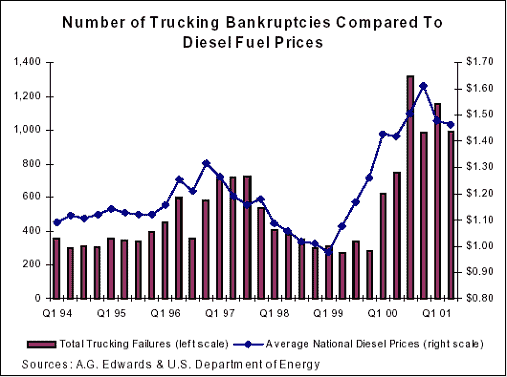
Fuel Price Variability – Many motor carriers have little ability to absorb rapid changes in fuel costs. Historically, trucking firm bankruptcies have been closely correlated with fuel price increases. Larger motor carries employ a number of strategies to hedge against changes in fuel price, including the use of swaps and options, or purchasing fuel on the spot market or at the wholesale level. While many view public sector intervention in the issue of fuel prices as inappropriate, several bills have been introduced recently in Congress that attempt to mitigate the effect of fuel price changes (particularly on smaller carriers) by requiring carriers to apply a fuel price surcharge on shippers.
Urban Congestion and Travel Time Reliability – Urban congestion causes an increase in travel times for motor carriers, and worse, a reduction in travel time reliability. If possible, carriers respond to congestion by selecting alternative routes, shifting to off-peak periods, or scheduling trips with a greater travel time buffer. A variety of strategies can reduce the extent of congestion or at least make it more tolerable. For example, truck drivers and dispatchers can make use of real time traffic information systems to help minimize delay. Greater benefits could be realized if carrier route planning systems were integrated with measures of travel time reliability. There has been recent interest in truck-only lanes or truck freeways as a way to serve goods movement, reduce congestion, and improve highway safety. Toll-financed truck facilities are being considered in Southern California and Virginia.
New Emissions and Fuel Standards – There is widespread concern that the new emissions standards for heavy-duty engines, which began October 1, 2002, will cause lower fuel economy, lower horsepower, and the possible need for more frequent engine maintenance. Because of these side effects, particularly uncertainty over engine reliability, motor carriers have been reluctant to purchase the newly certified engines. Instead, fleets have been purchasing larger numbers of older engines, and also holding on to their current trucks longer than they normally do. It is too soon to determine how the new emissions standards have affected fuel economy. However, it appears that the industry’s fears about fuel costs and maintenance problems with the new engines have been exaggerated. The emissions standards that will take effect in 2007 pose a far greater challenge for engine makers, and may generate more concern about reliability and performance.
Driver Waiting and Loading Times – Long waiting and loading times for truck drivers impose substantial costs on the motor carrier industry. For the most part, this problem affects for-hire truckload carriers only, and according to a Truckload Carriers Association study, is worst in the grocery sector2. At its core, the problem results because shippers do not directly bear the cost of the driver and equipment delay they cause. One possible solution is to change shipper/carrier contracts so they address wait times and allow for detention charges if necessary. Other strategies involve changes to loading dock practices, such as allowing 24-hour delivery or providing a mechanism for the delivery of freight that arrives early. Some have argued that cooperative industry efforts or voluntary programs could help reduce wait times, such as an industry International Standard Organization (ISO) standard addressing loading and unloading practices in detail.
Security Concerns – The events of September 11, 2001 focused attention on trucking security, including border crossings, hazardous materials transport, potential contamination of food shipments, and the potential use of a truck trailer to deliver a weapon. Although the heightened focus on security has changed the operating environment for motor carriers, our interviews suggest that, at the moment, motor carriers are not generally feeling adverse productivity effects. Many carriers appear to welcome the increased emphasis on security. New security procedures and regulations for trucking are expected, however, and may result in more significant industry effects. For example, new hazmat carriers regulations being considered include requirements for hazmat carriers to provide armed escorts, pre-notify states about hazmat shipments, track trucks using GPS transponders, employ e-seals, and equip tractors with electronic ignition locks. If adopted, the cost and productivity effects of some of these proposals (such as armed escorts) would be significant. Some carriers have suggested that federal action is needed to revise the definitions of hazardous materials because the current definitions are excessively broad and may prevent attention and resources from being focused on shipments that pose the greatest threat
Delays at Port Facilities – Delays at port facilities and poor chassis condition at ports are serious issues, but affect only a small segment of the motor carrier industry. Similar to shipper loading docks, port facilities can impose long wait times on truckers with impunity since the ports do not bear the economic cost of the delay. But the long wait times at port facilities are caused by a set of factors that are fairly distinct from the wait times encountered at other shipper facilities, including lack of sufficient gates, limited hours of terminal operation, poor chassis maintenance, connector road congestion/poor roadway design and vessel bunching. Overcoming some of the barriers to more efficient port gate operation, such as longer operating hours and full automation of paperwork, will require a negotiated settlement between labor and port management. Other more practical solutions include use of reversible gates, two-stage gates, specialized gates, or terminal staging areas. Some policy makers have proposed to fine terminal operators whose operations regularly require port drayman to wait in long lines to enter terminals, and such a bill was recently signed in California. Several states have passed laws to address the issue of poor chassis condition at ports, and ATA has urged implementation of a national rule on chassis roadability.
2 INDUSTRY OVERVIEW
Trucking is the backbone of the nation’s freight system, carrying 85 percent of domestic cargo by value and 70 percent by weight.3 Even freight carried by other modes often depends on trucking to provide access to air cargo, railroad, and seaport terminals. The flexibility of the motor carrier industry has allowed trucking to serve nearly every freight transport market, meeting shipper demands with high levels of service.
The motor carrier industry has evolved tremendously since the Motor Carrier Act of 1980. As a result of deregulation, trucking rates declined significantly, and a more responsive and flexible trucking industry emerged. The elimination of regulatory barriers to entry, and particularly the requirement for route and commodity-specific operating authority, permitted the rise of the truckload sector that has brought huge gains in productivity. It was this development that allowed guaranteed just-in time (JIT) deliveries and all the other features that brought the evolution of advanced logistics systems and supply-chain management.
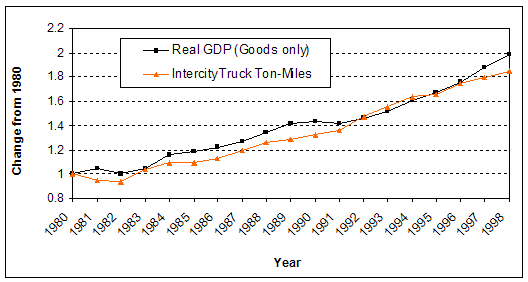
Over the last decade, growth in trucking ton-miles has accelerated significantly and at a faster rate than GDP, but in line with growth rates in manufacturing. As shown in Figure 1, both goods production and intercity trucking ton-miles have nearly doubled since 1980.
Figure 1: Change in Trucking Ton-Miles and U.S. Goods Production Since 1980 4
In addition to absolute growth, trucking has been gaining a larger share of the freight market. Trucking’s share of domestic intercity freight ton-miles (non-pipeline) grew from 29 percent in 1980 to 35 percent in 1998.5 Reasons for this mode shift include:
- Just-in-time inventory practices. Manufacturers that employ JIT systems strive to minimize on-site inventory by coordinating their supply deliveries with production schedules. This requires smaller, more frequent and more reliable inbound shipments – characteristics that typically favor trucking over rail.
- Manufacturing and warehouse location patterns. Manufacturing and warehousing have migrated from urban areas to suburban or rural locations, often in search of cheaper land and labor. Longer hauls by truck carriers are required to connect more distant supply, production and consumption facilities. At the same time, these facilities are increasingly inaccessible by rail.
- Reliable highway network. The completion of the Interstate Highway System has linked virtually the entire nation by a safe and reliable network of four-lane highways ideally suited for truck transport.
The flip side of the competitive, responsive trucking industry is that some carriers are very sensitive to changes in the marketplace and regulatory environment. Profit margins among publicly traded truckload motor carriers are typically close to or under five percent. Driver turnover is high in some industry segments. As a result, it’s possible for significant changes to the business environment to force large numbers of motor carriers into bankruptcy. Because so much of the U.S. economy relies on trucking, such a development could ripple throughout the economy with profound effects.
The remainder of this section further describes the trucking industry. We sub-divide the industry into its principal segments, describe their basic operating characteristics, and provide some data on the size and level of activity of the various segments. The principal sub-divisions of the industry, together with associated revenue and VMT estimates for 2000, are shown in Table 1.
There are three major lines of division within the industry. One is between long haul and short haul: between companies that provide primarily intercity services and companies that provide service within a metropolitan region and its outlying areas and perhaps to nearby cities. Second, there is the divide between the for-hire and private-carriage segments. The former is the firms that move the goods of others for payment– probably what most people think of as the “trucking industry.” The latter are firms that use their own trucks and drivers to move their own goods. When their trucks are returning empty, many private carriers will move the goods of others for hire; some will not. The third division splits the for-hire segment into two principal classes: truckload (TL) and less-than-truckload (LTL). TL carriers move truckloads of goods direct from origin to destination. LTL carriers consolidate, haul, and distribute goods through a network of terminals in less–than–truckload lots. These segments are discussed below in greater detail.
 |
Long-haul and regional | Short-haul and local | ||||
|---|---|---|---|---|---|---|
|
For Hire | Private | For Hire | Private | ||
|
TL | LTL | Other7 | |
|
|
| Revenue | $96 | $26 | $31 | $173 | $76 | $122 |
| VMT | 77 | 8 | N/A | 81 | 30 | 50 |
2.1 Long Haul and Short Haul
One major division within the industry is between long haul and short haul. Selecting a point of demarcation is inherently somewhat arbitrary. For the estimates in Table 1, we have chosen 150 miles as the average length of haul that is the border between short haul and long haul. Note that many industry observers will speak of a distinction between local and short haul carriage, the latter having longer moves. Most truckers also make a clear distinction between regional and long haul operation, the latter having the longer runs. The estimates in Table 1 do not make these distinctions.
2.2 For-Hire Service
The major division in the for-hire industry segment is between truckload (TL) and less-than-truckload (LTL) service. The distinction is a simple one. A truckload firm moves a shipment, a full truckload, or close to it, directly from origin to destination. A LTL operation collects small shipments from local pick-ups, moves them over the road between terminals in truckloads, breaks them up at the destination terminal, whence it makes local deliveries. For-hire firms also include household goods and parcel-delivery firms.
Truckload companies
Total TL revenue is about $110 billion, of which about $97 billion is from long-haul service. These firms own an estimated 770,000 tractors; of these, approximately 660,000 are in long-haul service. There are approximately 53,000 TL firms. This is a stark contrast with the LTL sector where there are fewer than 1,000 firms in total and less than 40 firms account for almost all the business. Among the TL firms, 40,000 are very small, with five or fewer tractors. This group includes the owner-operators, those that are genuinely independent firms with their own customers. There are roughly 300,000 owner-operators in total, but the great preponderance of them are working under leases to larger TL companies such that they are, in effect, part of the capacity of those companies and not firms seeking business for their own account.
Aside from the owner-operators, there are still 13,000 or so TL companies, a large number compared to any other segments of the for-hire business. As shown in Table 2, a substantial share of the revenue is with small and middle-sized TL firms. Assuming annual revenue of $125,000 per tractor8, a company with 100 tractors has revenue of $12.5 million—not a big company. But firms with fewer than 100 tractors have around 43 percent of sector revenue. If we go up to 500 tractors, revenue of $62.5 million, we find 68 percent of total TL revenue going to firms with less revenue than that.
| Number of Tractors | (millions) Revenue |
Percent |
|---|---|---|
1 – 5 |
$9,768 |
8.9% |
6 – 24 |
$12,369 |
11.2% |
25 – 99 |
$25,597 |
23.3% |
100 – 499 |
$27,250 |
24.8% |
500+ |
$35,059 |
31.9% |
Total |
$110,042 |
100% |
The truckload business is an example of an industrial sector where something like atomistic competition actually prevails. This fact is reflected in the tight average operating ratio of this segment, 95.0 percent. A truckload company is analogous to a tramp-steamer company in the ocean-freight business. The trucks do not operate on fixed routes and schedules; they go where the loads are. It is a bit difficult to generalize about operating patterns of TL firms. Some firms will concentrate in a particular region, some in very specific traffic lanes, and some will criss-cross the nation, taking the best loads, in a business sense, as they find them. A TL company’s dispatching staff live in a complex world, where they are constantly trying to make optimal decisions as to how to allocate their equipment and drivers to the available loads, bearing in mind a host of cost considerations.
Regarding the 40,000 owner-operators noted above, those with five or fewer tractors can support neither a sales force nor a dispatch center. Typically, such companies function in one of two ways. Some of them will get their business from one or two customers with whom they have contracts, or some kind of arrangement, to haul loads among a few points. Others may put their principal reliance on trucking brokers who provide, in effect, their marketing and dispatch functions. As companies increase above the minimal size, there will be at least one person devoting time to sales and dispatch, and then as revenues increase, there will be groups for these functions.
Truckload companies do not have terminals in any meaningful sense. Most companies will have a home terminal, but it is principally a site for offices, maintenance facilities, and a place to park tractors and trailers when they are not on the road. Some companies that serve large geographic areas will have multiple bases, but others will not.
Note that many TL companies are plagued with a very high rate of driver turnover; retention of drivers is a major issue in the TL sector. This is not generally the case in LTL and private operations. Part of this stems from better pay and benefits in these latter sectors; and part of this is because many of these companies either employ union drivers or must compete with union employers to obtain good drivers. But high driver turnover among TL carriers is also likely due to the irregular and often-shifting work times of TL operation and the amount of time on the road and away from home that drivers must incur.
Less-than-truckload companies
As already noted, LTL companies are a sharp contrast with TL firms, both in degree of concentration and in mode of operation. Thirty-five companies receive 85 percent of LTL sector revenue. The seven largest LTL concerns have combined revenue of $13.7 billion, about half the sector total.
While the LTL sector has a much higher degree of concentration than does the truckload business, it is much smaller, with total revenue of $27 billion, compared to about $110 billion in the TL sector. There are over almost 500 LTL companies that list themselves as having average hauls of less than 150 miles. Some of the service they provide would be local LTL movement in the sense that actual origin and destination are within 150 miles of each other. A good part of their service would also be provision of pick-up and delivery service under contract with a larger LTL company that uses a local concern to avoid investing in a terminal in that area.
In order to operate its business, whether regional or national, a LTL firm requires a set of terminals. Each terminal will have a force of pick-up and delivery drivers. Typically, they go out in the morning with loaded trucks, make deliveries, spend the afternoon picking up loads, and return to the terminal at the end of the day with outbound loads. These loads are moved across t Wolfe, Michael, for delivery the following morning, when the pick-up and delivery cycle is repeated. Some loads may be going out of a carrier’s region; they would be handed over to another LTL firm for onward movement to a destination at one of the other company’s terminals. That is the general pattern of operation in a regional LTL company.
For the “national” LTL firms, those that provide long-haul service and have average lengths of haul in excess of 1,000 miles, the operation is somewhat more complicated. These companies will have a set of major hub terminals, each of which has a large number of satellite terminals. Line-haul moves will often be from satellite to hub to hub to satellite. In some circumstances, a trailer may go directly from a satellite to a hub in another region. Where the line-haul is more than 500 miles, moves are frequently handled with either teams or relays. (The national LTL companies are usually thought of as Roadway Express, Yellow Freight System, ABF Freight System, Overnite, and FedEx Freight.)
2.3 Private Carriage
For-hire truckers are in the business of carrying other people’s goods. Private carriers are firms that choose to carry their own goods. Generally, private carriers do this because they are very sensitive to requirements for timely and reliable service, either because of their own methods of supply-chain management or those of their customers. Some private carriers also use their drivers to handle delivery to customers as part of their customer-relations efforts.
Private carriers pay a price for moving their own goods. The alternative in most cases would be for-hire truckload service; private carriage is somewhat more costly than truckload – a premium of a little more than ten percent on a truck-mile basis.9 Several factors may account for this difference: the high level of service that private carriers provide themselves which would include a higher ratio of empty miles to loaded miles; economies of specialization realized by truckload companies; and generally more expensive pay-and-benefits packages for private drivers. Many private carriers try to offset this cost differential by seeking loads on a for-hire basis for their backhauls that would otherwise be empty.
Information on private carriers is more limited than is the case with for-hire carriage. Private carriers are not treated as trucking companies by many data gathering efforts. Private carriers may range in size from a handful of small trucks used in local delivery to thousands of tractors in long-haul service. We estimate that about 700,000 tractors and drivers are employed in private, long haul service. Perhaps 100,000 tractors are in short-haul service together with a much larger number of straight trucks. Imputed revenues have been estimated for private carriage: $123 billion in long-haul service and $122 billion in short haul service.10
An important point is that private short-haul operations include a great deal of truck movements that do not involve carriage of goods. These involve trucks that carry people and equipment to places where they are needed to provide services of one kind or another. This includes: service trucks belonging to utility companies; trucks of a variety of types of service contractors—plumbers, electricians, roofers, landscapers, etc.; trucks taking crews and equipment to construction sites; dump trucks; trash trucks; and other like vehicles. Otherwise, a great deal of short-haul private carriage is local distribution—movement of snack foods, baked goods, beverages, fuels, etc. to wholesale or retail points, and retail deliveries to households and offices of many kinds of goods.
It is difficult to generalize about private-carriage patterns of operation. In short haul service, a driver starts from a store or warehouse and makes a circuit of deliveries in the region, frequently covering the same approximate route every day. In long-haul operations, there can be considerable variety. A firm may ship, for example, from a single national point to a small number of regional distribution centers which, in turn, ship to a large number of stores or more distribution centers. Multiple drops are quite common: a driver leaves a factory or warehouse with a full trailer and makes several delivery stops before returning home. Some runs of this nature require the driver to spend several days on the road, just as a TL driver would. There will be other private operations in which the drivers never spend a night away from home.
Some firms arrange for their private carriage on a contract basis; they outsource their carriage to a contractor, usually a truckload company that dedicates an agreed number of trucks and drivers to a private carrier's service. Since the equipment and drivers are under the control of the private carrier, such an operation behaves in the same way as any other private carrier.
3 STUDY METHODOLOGY
3.1 Issue Identification
The intent of this study is to focus on the most important issues facing the motor carrier industry. A screening process was used to identify these issues. We first created the following comprehensive list of all possible issues through a review of industry trade publications, discussions with industry experts, and internal staff brainstorming.
- Urban congestion and travel time reliability
- Access to port facilities
- Hours of service rules
- Security concerns
- Safety concerns and NAFTA
- Driver turnover
- Rising insurance costs
- New emissions and fuel standards
- Truck size and weight limits
- New ergonomics regulation
- Introduction of truck toll roads
- Fuel price volatility
- Long driver waiting and loading times
- Shortage of vehicle mechanics
- Growth in time-sensitive delivery requirements
- Growth in intermodal/containerized freight
- Demands for new information technologies
3.2 Issue Selection
We identified the following criteria for assessing the importance of each issue and the appropriateness of including the issue in the study:
- The issue has potentially significant effects on motor carrier productivity.
- The issue is an emerging issue, likely to grow in importance in the future.
- The issue is likely to have present or near-term effects.
- The issue warrants additional study.
- There are opportunities for a public or private sector response to the issue.
Upon further review, the following three issues were determined to be inappropriate for study consideration: growth in time-sensitive delivery requirements, growth in intermodal/containerized freight, and demands for new information technologies. These issues are fundamentally different from the others in that they reflect customer-driven market shifts internal to the industry, rather than external forces that bear on motor carriers. In other words, they represent a long-term shift in the nature of the market rather more than a disruption to the industry. As such, there is little opportunity for public or private response to these issues other than to serve customer demands.
We presented a list of potential issues to seven motor carrier industry experts (primarily trucking company executives) and asked them to rank or discuss the issues in terms of importance. Industry experts were asked to apply the five criteria listed above in making their assessment. Interviewees were provided the opportunity to identify additional challenges that were not on the list.
Table 3 shows the ranking of each of the issues provided by the interviewees as well as an average rank and an overall rank. Two respondents declined to numerically rank the potential issues, preferring instead to discuss the potential effects of each issue and qualitatively assess its importance. To integrate these responses with the numerical rankings, we assigned issues with “high” importance a score of 3 and issues with “low” importance a score of 10. Responses were fairly consistent, with some notable exceptions. Rising insurance costs were ranked first or second by all but one respondent. Four respondents ranked fuel price volatility in the top three issues, although it ranked low with the two largest carriers. All interviewees placed the hours of service rule among the top six issues. Most interviewees gave urban congestion and travel time reliability a rank of between fourth and seventh. There was more variation in the assignment of rank to driver waiting and loading times and security concerns.
Some of the differences in responses are undoubtedly caused by differences in carrier type. For example, the ergonomics issue is more important to LTL carriers, who do more loading and unloading of vehicles on their premises. Rising insurance costs may be more significant to smaller carriers, who are unable to self-insure. Larger firms may be less concerned about fuel price volatility because they are better able to use strategies that provide some insulation against fluctuations.
Issue |
Mid-sized TL |
Mid-sized TL |
Mid-sized TL |
Mid-sized LTL |
Retired Industry Expert11 |
Broker-3PL |
Large LTL |
Average |
Overall Rank |
|---|---|---|---|---|---|---|---|---|---|
Rising insurance costs |
1 |
1 |
1 |
7 |
2 |
3 (High) |
3 |
2.6 |
1 |
Hours of service rules changes |
3 |
4 |
5 |
1 |
6 |
3 |
3 |
3.6 |
2 |
Fuel price volatility |
2 |
3 |
2 |
10 |
1 |
10 (Low) |
10 |
5.4 |
3 |
Urban congestion and travel time reliability |
5 |
5 |
4 |
5 |
7 |
3 |
10 |
5.6 |
4 |
New emissions and fuel standards |
4 |
6 |
7 |
3 |
10 |
3 |
10 |
6.1 |
5 |
Driver waiting and loading times |
10 |
2 |
3 |
9 |
4 |
10 |
10 |
6.9 |
6 |
Security concerns |
11 |
10 |
8 |
4 |
5 |
3 |
10 |
7.3 |
7 |
Truck size and weight limits |
9 |
14 |
10 |
11 |
11 |
3 |
3 |
8.7 |
8 |
Driver turnover |
6 |
8 |
6 |
13 |
8 |
10 |
10 |
8.7 |
9 |
Ergonomics regulation |
8 |
7 |
14 |
2 |
15 |
10 |
10 |
9.4 |
10 |
Safety concerns and NAFTA |
13 |
9 |
11 |
6 |
12 |
10 |
10 |
10.1 |
11 |
Shortage of vehicle mechanics |
7 |
11 |
12 |
12 |
9 |
10 |
10 |
10.1 |
12 |
Introduction of truck toll roads |
12 |
12 |
9 |
8 |
14 |
10 |
10 |
10.7 |
13 |
Delays at port terminals |
14 |
13 |
13 |
14 |
13 |
10 |
10 |
12.4 |
14 |
Insufficient knowledge of cost structure |
|
|
|
|
3 |
|
|
|
|
We recognize that the motor carrier industry is diverse, and that this interview process does not account for all the variation that exists between carriers in terms of fleet size, operating range, geographic location, cargo type, etc. However, the general consistency of the interview responses and close correlation of these responses with issue coverage in industry publications suggests that an extensive survey would result in the same top issues.
The results of the screening interviews were presented to FHWA. After discussions between FHWA and the consultant team, it was decided that the study should focus on the seven top ranking issues, plus delays at port terminals. Port terminal delay did not rank high in importance in any of the screening interviews, probably because the issue affects only a very narrow segment of the motor carrier industry – port drayage. Most port draymen are owner-operators, and their perspective is obviously not reflected in interviews with firms. Delay for truckers accessing ports is generally acknowledged to be getting worse, has potentially significant productivity repercussions, and can potentially be addressed through public or private responses. Thus, it was agreed that the issue of port delay meets the criteria for inclusion in the study.
3.3 Issue Analysis
Assessment of the selected issues was conducted primarily through literature review and interviews with motor carrier industry experts. The purpose of the literature review was to gain a more comprehensive understanding of each issue, its potential effects, and possible mitigating actions, and also to identify the specific industry segments most affected by the issue. Reviewed literature includes trade publications, research studies, and congressional testimony.
Interviews were conducted with 14 motor carrier industry experts, primarily trucking company executives and representatives of trucking industry associations. Interviewees were promised anonymity; their characteristics are shown in Table 4.
| Carrier Type | Freight Type | Operating Range | Power Units |
|---|---|---|---|
Truckload |
Dry van |
Long-haul and Regional |
45 |
Truckload |
Dry van |
Long-haul and Regional |
160 |
Truckload |
Flatbed |
Long-haul and Regional |
110 |
Truckload |
Dry van (retail goods) |
Regional |
168 |
Truckload |
Liquid and dry bulk |
Regional |
129 |
Truckload |
Hazardous liquid bulk |
Long-haul and Regional |
60 |
Truckload |
Dry van |
Long-haul and Regional |
1,000 |
Truckload |
Dry van |
Long-haul and Regional |
2,670 |
Truckload |
Dry van |
Long-haul and Regional |
225 |
Drayage, ports |
Dry van, containers |
Regional |
61 |
Drayage, ports |
Dry van and dry bulk |
Regional |
425 |
LTL |
Dry van |
National |
4,500 |
LTL Trade Association |
N/A |
N/A |
N/A |
Owner-Op Trade Assn. |
N/A |
N/A |
N/A |
The following eight sections discuss each of the issues we assessed, presented in the order of importance based on our issue screening interviews (Table 3). We describe each issue, including its causes and effects on the motor carrier industry. Then we discuss potential solutions that could help to avoid or mitigate some of the negative effects on motor carrier productivity and service quality. In addition to government actions, we discuss private sector solutions, recognizing that there may be a government role in supporting private sector solutions. Finally, we identify some areas of needed additional research for each issue.
4 RISING INSURANCE COSTS
Insurance rates for the motor carrier industry have risen steeply over the last several years. Most of the trucking companies we interviewed identified this issue as the number one problem they currently face.
Motor carriers are required to have insurance policies for liability, physical damage, and workers compensation. Firms also purchase umbrella policies to obtain additional coverage above that provided by their primary insurance. A recent survey by the American Trucking Associations (ATA) confirmed that insurance rates have increased substantially for both primary and umbrella policies.12 Table 5 shows average percentage rate increases over the prior year for 2000, 2001, and for before and after 9/11.13 The survey found that average primary insurance rates increased by 17 percent in 2000 and 32 percent in 2001. For umbrella policies, rates rose by 33 percent in 2000 and 87 percent in 2001. The ATA survey did not control for the level of coverage obtained, but rate increases adjusted for coverage are likely to be higher, because many carriers are reducing their coverage to control costs. Steep rate increases continued in 2002. In our interviews with motor carriers, many reported increases of 35 to 45 percent over the last two years.
Insurance Type |
2000 |
2001 |
2001 before 9/11 |
2001 after 9/11 |
|---|---|---|---|---|
Primary |
17% |
32% |
30% |
37% |
Umbrella |
33% |
87% |
74% |
120% |
4.1 Causes and Industry Effects
Insurance premiums are driven by two primary factors: performance of insurance company investments, and loss experience and expected losses. Insurance companies invest in bonds and stocks, so there is an inverse relationship between investment returns and premium levels. As a firm’s investment income rises, it can afford to give up some premium income and, thus, can be more aggressive in pricing for market share. Insurance companies can, and do, sustain losses on premiums when investment income is high enough. Conversely, as investment income falls, firms must seek higher income from premiums and some firms will sacrifice market share in order to do this. We are now in a period of very low investment returns, which has placed upward pressure on insurance premiums.
Regarding loss experience, trucking accident rates have been falling but damage awards have been rising with a concomitant increase in pay-outs. Further, many observers believe there has been a substantial September 11 effect, especially in the reinsurance market. Reinsurance is priced, not on the experience in any particular industry, but on the market’s overall perception of risk; the level of risk perceived in this market has been significantly higher since the attacks of last year.
Rising insurance rates are a critical issue for the motor carrier industry for several reasons. The conditions causing rates to rise do not appear likely to be mitigated in the near future. Indeed, the low investment returns, increased risk of terrorism, and increased damage awards could cause further rate increases in the future. Additionally, competition in the trucking industry makes it difficult for carriers to pass these costs along to their customers in the form of higher prices. Insurance rate increases reduce the profitability and productivity of the motor carrier industry, and may force marginal companies out of business. Rising insurance rates were one of the factors cited by Consolidated Freightways as a cause of their recent bankruptcy.
Not everyone sees the rising insurance rates as a crisis, however. An executive with the Owner Operator Independent Drivers’ Association (OOIDA) noted recently that owner-operators have long paid higher insurance rates, and that rates for larger firms are only now catching up.14 Others claim that insurance was underpriced through much of the 1990s and is now reaching comparative levels in inflation-adjusted terms.
4.2 Possible Solutions
Although insurance costs were identified as a very serious problem by nearly all motor carriers interviewed, few were able to suggest public or public-private solutions to the problem. Some carriers believe the only way to address the problem is to reduce the incentive for lawsuits through tort reform. Others see the problem as primarily market-driven, and anticipate a market correction in the future. Historically, periods of high rates have eventually attracted more providers to the market, which increases competition and exerts downward pressure on rates.
Until rates come down, many carriers are taking steps to reduce their insurance costs by, for example, reducing their level of coverage, employing self-insurance, or focusing more of their resources on improving safety. These strategies, and a possible government role, are discussed below.
Private sector solutions
Self-insurance is a strategy that larger carriers with sufficient resources can employ. Some smaller carriers can also reduce coverage levels and choose to bear the risk of claims. Recently, risk retention groups have become popular. Groups of carriers with superior safety performance establish these organizations as captive insurance companies to reduce their insurance costs. One example is the American Trucking and Transportation Insurance Company (ATTIC) risk retention group, established initially by six carriers. Each member must undergo a fleet safety standard inspection audit, achieving a minimum score of 67 percent in each of 30 categories of fleet safety operation. The inspection is conducted at six month intervals and fleets who don’t maintain the required minimum score can face penalties and eventual expulsion from the group.
Many firms have sought to reduce insurance rates by reducing the risk of accidents. Firms that self-insure often have the most extensive safety management programs to reduce risk. These firms frequently maintain stringent hiring criteria, taking on only new drivers with good records, good log audits, and good roadside inspection histories. Once hired, driving records are reviewed every six months and problems are addressed proactively. Other steps taken by carriers to reduce accident risk include:
- Driver training programs that include retraining and refresher courses.
- Human resources policies that provide drivers with regular schedules and allow drivers to decide when they are too tired to drive.
- Dispatchers who are paired regularly with the same drivers, who are involved in the company safety program, and provided bonuses tied to safety performance.
Public sector solutions
Insurance companies themselves are often integrally involved in promoting
new technologies and systems to improve safety. There may be a government
role in promoting the expansion of existing industry programs to share
information and voluntarily achieve higher safety standards. An example
is the 1-800-How’s My Driving program, operated by SafetyFirst.
Insurance companies make participation in this program a requirement
for obtaining coverage and provide the service at no cost to fleets.
Another example is DriveCam Video Systems partnership with National
Interstate Insurance Company (NIIC).
DriveCAM will market its driving feedback system to NIIC-insured
passenger transportation fleets, with NIIC
reimbursing 50 percent of the cost of installation for fleets. DriveCam’s
system records what drivers see and hear during unusual driving instances.15
If the safety benefits of adhering to higher standards can be documented,
trucking firms and insurance companies will have significant financial
incentives to achieve higher standards.
Tort reform is one policy action that could significantly affect insurance
rates. The U.S. tort system is more than twice as expensive as those
in other comparable industrialized countries, according to the Council
of Economic Advisors. For all civil cases, approximately 53 percent
of verdicts are decided in favor of the plaintiff. For those cases involving
trucks, 80 percent of the verdicts are for the plaintiffs.16
Currently the law allows for both compensatory damages for economic
losses, pain and suffering, and punitive damages designed to punish
the defendant. One proposed reform would allocate punitive damage awards
to a public fund that would remedy related problems, instead of giving
them to the plaintiffs and their lawyers, thereby reducing the incentives
for litigation. Federal legislation would be required to fully reform
the system, although some state reforms have already taken place. Under
Florida law, for example, 60 percent of punitive damage awards are given
to the state.
Other legal reforms, such as clarification of insurer exposure to Motor Carrier Safety Form 90 (MCS-90) requirements, could also reduce underwriting costs and hence improve carrier rates. MCS-90 differs from a conventional vehicle insurance policy in several ways; for example:
- MCS-90 is a Federal requirement for interstate carriers.
- Under MCS-90, the insurance company indemnifies (stands as a guarantor of the payment of liability), and the insured reimburses.
- MCS-90 does not impose a duty on the insurance company to defend the insured.
The Federal Motor Carrier Act of 1980 requires interstate motor carriers to provide evidence of financial responsibility. One way to achieve this is to obtain a MCS-90 endorsement from an insurance company. An MCS-90 endorsement makes the insurance company a guarantor of the motor carrier’s ability to pay liabilities it may incur, including bodily damage associated with its drivers and vehicles, or property damage associated with pollution losses (for example, from hazardous materials spills). The primary purpose of requiring motor carriers to demonstrate financial responsibility is to ensure that liabilities incurred in hazardous material spills, for example, will be paid, even in the event of the bankruptcy of the responsible motor carrier.
MCS-90 indemnification is usually attached as a rider to other insurance coverage that motor carriers are required to have, but is distinct and separate from such coverage. Under MCS-90, the insurance company evaluates the credit risk of the firms it covers. It only becomes responsible for “hazard” risk when these firms become bankrupt, or otherwise unable to pay. In addition to MCS-90 indemnification, motor carriers also purchase insurance coverage that obligates the insurance company to reimburse them for liabilities and costs associated with accidents or hazardous spills.
Recent judicial interpretations of the MCS-90 requirement have created legal uncertainty as to parties that this coverage might apply to. For instance, the 9th and 10th circuit courts have ruled that MCS-90 should cover the permissive users of trailers owned by a third party.17 In a recent case, a trucker hauling a trailer owned by a third party collided with a bus. Although the third party’s insurance policy did not cover any liabilities incurred during the permissive use of the trailer, the court ruled that the insurance company was responsible for the liabilities incurred pursuant to its MCS-90 indemnification. The uncertainty over the scope of coverage provided by the MCS-90 indemnification has increased the risks of providing this coverage. Industry advocates have argued that Congress should clarify the law and eliminate coverage of permissive use of trailers, which would reduce underwriting costs associated with issuing MCS-90 endorsements.18
4.3 Research Needs
Some industry proponents have argued that better data on insurance rates are needed to help trucking firms assess surcharges to account for unanticipated price increases. Data comparing rates across different industry sectors, such as household goods, hazmat, or tank trucks would enable trucking firms to determine average levels of insurance rate inflation. This publicly available insurance rate index could then be used in contracts to set surcharges.19
Research and analysis of the potential for industry voluntary programs to improve safety could help to promote innovative private sector solutions. These could include risk retention groups, enhanced private sector vehicle technology, human resource policies, or other safety systems. Areas where there are legal or market barriers or data needs could be identified.
Finally, there is a lack of published information on the safety performance improvements of new vehicle technologies and management systems. Research that more fully documents the effects of these developments on safety could help to speed their adoption.
5 HOURS OF SERVICE RULE CHANGES
The Hours of Service (HOS) regulations apply to motor carriers (operators of commercial motor vehicles, or CMVs) and CMV drivers, and regulate the number of hours that CMV drivers may drive, and the number of hours that CMV drivers may remain on duty before a period of rest is required. The current regulations are divided into “daily” and “multi-day” provisions, which can be expressed as follows:
- Operators can cumulatively drive up to 10 hours or be on duty up to 15 hours since the end of their last 8-consecutive-hour break.20
- Operators can cumulatively drive or be on-duty up to 60 hours over the last 6 consecutive 24-hour periods plus the current 24-hour period, or 70 hours over the last 7 24-hour periods plus the current 24-hour period.
Several categories of motor carriers and drivers are exempt from parts of the HOS regulations or from the entire HOS regulation under the National Highway System Designation Act of 1995. There are special exceptions for agricultural haulers, construction firms, and utilities. Other exemptions include oilfield operations, the State of Alaska driving and on-duty rules, the adverse driving and emergency conditions exceptions, the retail store deliveries provision, and the natural gas or oil well location sleeper berth exception.
A number of arguments have been made for changing the HOS rule. The FMCSA estimates that hundreds of fatalities and thousands of injuries occur each year on U.S. roads because of fatigued CMV drivers. The current HOS regulations are not based on a 24-hour day work cycle, and do not allow sufficient off-duty time for drivers to obtain eight hours of sleep. The HOS regulations have existed in their current form since 1962. Since that time significant changes in highways, equipment, and transit time demands have occurred. The high volume and speed of CMV operations on Interstate highways and the higher traffic conditions in local and regional environments require a high level of driver alertness. Also, the results of scientific studies into fatigue causation, sleep, circadian rhythms, night work, and other relevant matters were not available when the current HOS regulations were developed.
The DOT proposed a new Hours of Service rule in 2000. That rule sought to eliminate the distinction between on-duty and driving time and reduce the maximum allowable time on-duty. It also required “black boxes” to implement electronic record keeping and limit the ability of drivers to forge their record of duty status. The proposed regulation created five categories of drivers to which the rule had different applications. Although an Act of Congress halted this rule making, the FMCSA is currently planning a new rule-making in the near future. The new rule is now under review at OMB.
5.1 Causes and Industry Effects
Changes to the HOS rule could have significant effects on motor carriers. Until a new HOS rule is adopted, we can only generalize about these potential effects. More restrictive rules could possibly make vehicle and driver scheduling less flexible, and possibly raise the cost or lower the quality of service that trucking firms can provide.
- If the FMCSA proposes to reduce the number of allowable on-duty or driving hours, it could increase transit time for some shipments or increase the cost of maintaining that time. This would increase the number of drivers and equipment required to move existing freight volumes. The larger driver workforce required would also entail increases in the cost of driver recruitment.
- Depending on the magnitude of these cost and service effects, potential secondary effects of rule changes could include mode shifts and changes to other modes of business operation. Increases in the price and transit time of trucking service could drive firms to shift freight to other modes, such as rail. Alternatively, firms could also choose to increase inventories and reduce the frequency of shipment deliveries, effectively substituting warehousing for trucking services.
Our discussion here focuses on the economic effects on the motor carrier industry. It is important to note that motor carrier policy decisions should be based on other criteria as well, such as the following:
|
The effect of HOS rule changes would vary across industry segments. Local trucking operations rarely, if ever, reach the 10-hour driving limit, though some reach the 15-hour on-duty limit in peak periods. LTL line-haul operations rarely exceed 12 hours for on-duty shifts and driving times are always within 10 hours. The regularized nature of LTL and private carrier operations generally make it easier for these types of firms to comply with the existing rule or adapt to changes. But the spacing of these firms’ terminals and distribution facilities are based on the 10-hour rule; any significant reduction from that limit could have serious repercussions. The greatest effect of a changed rule would fall on the regional and long-haul for-hire truckload firms. They have the highest miles per driver and miles per tractor in the industry. Much of their traffic is not routine, and there is always pressure, especially on small operators, to drive a little longer or a little faster to get one more load.
Rule changes that move drivers to a 24-hour clock could increase safety and allowable driving hours at the same time. This is because the current rule may have a tendency to cause drivers’ schedules to rotate through different hours of the day over time. Provisions that allow drivers to keep a regular schedule and reduce nighttime driving can often allow drivers to get more sleep during their hours off.
In 2000, FMCSA proposed weekend provisions that required drivers to obtain a block of rest equivalent to a weekend after they reached their weekly hours limit. In the previous rulemaking, there were concerns that these “weekend” provisions could force motor carriers to operate during peak periods of congestion. The enhanced accident risk of operation during congested periods could offset accident risk reduction from the implementation of expanded rest periods. Additionally, some have argued that demand for more drivers would require the use of inexperienced drivers, further increasing accident risk.21
5.2 Possible Solutions
Because changes to the HOS rule have not been adopted, it is difficult to identify strategies that could mitigate their effects. At this point, a number of organizations have proposed modifications to the HOS rule in the name of improving safety and/or improving motor carrier flexibility. For instance, the National Sleep Foundation has suggested that limits on nighttime driving instead of total driving hours would have a greater effect on reducing accident risk. Others have argued that any new rule should include a 24-hour reset provision that would reset a driver’s weekly clock after 24 hours of rest. The Insurance Institute for Highway Safety has argued that any rule changes should include a 12-hour break after the exhaustion of the daily allowable hours on-duty.
Other institutions have proposed that rule changes should include provisions that increase the flexibility of the rule. The American Frozen Food Institute (AFFI) would like the HOS rule to provide for unscheduled absences by drivers that affect their employers and other drivers.22 To enable motor carriers to meet delivery schedules when unanticipated absences occur, AFFI has suggested that every CMV driver be accorded a number of exemptions from the hours of service restrictions on an annual basis. CMV drivers could use those exemptions as they see fit throughout the year to meet increased driving demands attributable to driver or equipment shortages or other circumstances.
Changes to labor standards
Alternatives to the current regulatory system exist. Some policy-makers have suggested that the Fair Labor Standards Act (FLSA) should be applied to the motor carrier industry to require overtime pay. This would provide economic incentives for firms to reduce the hours their drivers work. Motor carriers are currently exempt from the FLSA and are not required to pay overtime to their employees, although many private carriers and LTL companies do pay overtime. Truckload firms pay by the mile; LTL line-haul drivers are nominally paid by the mile, but they usually drive the same distances every day, so the effect is not very different from hourly pay.
Requiring motor carriers to conform to standard FLSA provisions would provide a self-policing mechanism to reduce driver work hours; it would also make trucking firms much more aggressive in dealing with waiting and loading delays. In general, motor carriers have argued that this would have disastrous effects on their business operations.
Voluntary initiatives
Some policy makers have argued that voluntary programs may be a better way to promote safety through hours of service. Many features of motor carrier safety make it a desirable target for employing voluntary initiatives, including the difficulty of enforcing existing rules, uncertainty over the most effective remedies, and a diverse industry that makes it hard to craft a single rule. Some private sector incentives already exist to encourage industry to improve safety performance.
The industry has significant economic incentives to reduce fatigued driving and its associated risks. Large trucking firms internalize a substantial component of accident risk in their insurance premiums, and many firms, not all of them large, employ a variety of practices, such as safety bonuses, driver training, or in-vehicle monitors to improve safety performance. Such monitors are in wide use by firms with 100 or more tractors.23 In many cases, the best solution will be defined by the usage and operating patterns of each carrier’s fleet. For instance, the FMCSA recently initiated a voluntary program that allows trucking firms to use on-board recorders, rather than the traditional log book, to comply with the hours of service regulation. Many private fleets have voluntarily adopted this technology, although its penetration into other markets has been limited.
A voluntary program that encourages the use of best practices and information sharing on safety management practices could complement current regulatory programs. Participation in such a program could be encouraged through a labeling program that would allow carriers to certify their product as adhering to a higher level of safety. Ideally, if program participants could be shown to have significantly safer operations, participation in the program might also be associated with lower insurance rates.
5.3 Research Needs
Additional research could help to inform the debate over alternatives to HOS regulation and help to identify potential mitigating responses.
- The expansion of existing voluntary programs focused on motor carrier safety should be studied. Opportunities to promote best practices, facilitate the exchange of information on safety performance management, and utilize safety labeling and branding programs should be examined in more detail. For instance, are there opportunities for carriers to collect and exchange information with insurance companies so those companies employing the best safety management practices are rewarded? Are there legal or market barriers that prevent carriers from collecting and sharing data to assess the effectiveness of best practices? Could FMCSA’s existing data collection and safety rating system be improved to convey more information to insurance companies or purchasers of trucking services?
- A survey of best practices for reducing fatigued driving could be used to assess the effectiveness of private efforts to improve safety. Research could explore the feasibility of a performance based safety program that would exempt carriers from certain types of regulatory scrutiny if they voluntarily implemented a set of best practices, or achieved a specific level of safety performance.
- Behavioral research and driver data analysis could be used to identify drivers who are exceeding reasonable parameters including incidents of hard braking, moving violations, complaints from the public, or HOS violations. Research that could help firms identify those drivers who would be likely to violate the HOS rules or other safety regulations could help firms better manage their driver recruitment and retention strategies.
6 FUEL PRICE VARIABILITY
Many of the motor carriers we interviewed cited fuel price variability as the second or third most important issue affecting their profitability. Because fuel accounts for up to 20 percent of the operating cost of a trucking company, a sudden increase in fuel prices can have a substantial effect on a firm’s bottom line.
Unlike rising insurance prices and HOS rule changes, fuel price volatility appears to be less of a concern for larger carriers. While most of the smaller carriers interviewed for this study identified the issue as critical to their ability to stay in business, larger firms are generally better able to cope with fuel prices change by using some of the strategies discussed in Section 6.2 below. One large carrier reports that fuel price fluctuation is not a problem because it affects all their competitors equally, including the railroads.
6.1 Causes and Industry Effects
Fuel price volatility is driven by a number of factors. Recent geopolitical developments, such as instability in the Middle East and Venezuela, have moved world oil prices higher. In the U.S., insufficient refinery capacity and demand for boutique fuels24 has caused regional fluctuations in prices. Seasonal demand for heating oil in the winter and gasoline in the summer also has an important effect on fuel prices.
Public policy plays affects fuel price variability. Section 211 of the Clean Air Act expresses the intent of Congress to promote a national diesel fuel standard, but allows EPA to grant waivers that permit states to mandate alternative fuel formulations under extraordinary circumstances. California has received a waiver that allows the state to require an alternative diesel formulation. Providing this boutique diesel fuel has resulted in substantial diesel price increases for California motor carriers. The average cost of California diesel has been 27 cents higher than diesel in other states in the West, and this price disparity has been as high as 40 cents. These price disparities have existed even though the production cost of California diesel has been estimated to be only 4 cents more per gallon.25
The motor carrier industry has resisted the introduction of boutique diesel fuels because they reduce competition among refineries, resulting in price increases. Because not all refineries will produce a diesel fuel that is required for a particular state, boutique fuels limit the number of competitors and increase the pricing power of refineries. Additionally, product shortages cannot be remedied by importing diesel from other regions of the country. Boutique fuels are thus susceptible to price spikes caused by an “inflexible” market. Limiting the proliferation of boutique diesel fuels could reduce both diesel prices and their variability over the long run. This assumes that states and regions can find other ways to reduce emission levels.
Industry advocates also argue that stringent environmental regulations have inhibited the development of new refinery capacity. No new refinery has been built in the U.S. in over two decades, and the number of operating refineries has been cut in half during that period.26 Declining domestic oil production and reduced domestic refinery capacity has been paired with increasing demand for diesel. High capacity utilization at existing U.S. refineries has limited the ability of the market to adapt to unexpected increases in demand.
With average operating profit margins of five percent, the industry has little ability to absorb changes in fuel costs. While predictable and long-term price increases can be passed onto customers, where firms face unanticipated price increases and have long-term contract obligations to deliver freight, they may be unable to adjust their prices quickly enough to recapture these costs. It is not surprising that trucking firm bankruptcies are correlated with fuel price increases, as illustrated in Figure 2.
Figure 2
6.2 Possible Solutions
There are a number of public and private sector strategies to mitigate variability in fuel prices.
Private sector solutions
Motor carriers can employ swaps and options to hedge against changes in fuel price. An option is the right to purchase an asset at a specified price and date in the future. A swap is similar in that it guarantees the purchase price of an asset in the future. A swap sets an average price at which a company might purchase diesel fuel. If the firm’s actual purchase price exceeds this, the bank (or other institution) will make up the difference. If the average purchase price falls below this level, the firm is obligated to pay the difference to the bank. Overall, the purpose of these arrangements is to allow a firm to plan their pricing and reduce the risk that they will be locked into unprofitable agreements to deliver service. While options and swaps can help large firms reduce the risk of fuel price increases, small firms do not typically purchase sufficient volumes of fuel to employ them.
Another potential way for firms to reduce their fuel cost and their exposure to fuel price variability is to purchase fuel on the spot market or at the wholesale level and maintain their own distribution network. Purchasing on the spot market requires very large purchases, often over a million gallons of fuel. Purchase of fuel at the wholesale level is a more feasible option for smaller companies, requiring purchases as small as 3,000 gallons. Purchasing fuel in bulk quantities allows firms to avoid retail markup and local fluctuations in prices, but makes them responsible for transporting and distributing fuel. Environmental risks and liabilities associated with the storage and distribution of fuel can be significant. Many firms have found that making their in-house distribution network pay for itself is a management challenge.
Some firms have chosen to negotiate cost plus contracts with a large fuel retailer. Firms purchasing significant volumes of fuel can often obtain discounts, although these agreements still leave trucking firms vulnerable to fluctuations in the price of oil in the world market.
Public sector solutions
Fuel price variability is viewed by many as a product of market forces, and thus inappropriate for government intervention. However, several bills have been introduced recently in Congress that attempt to help mitigate the effects of fuel price changes. The Motor Carrier Fuel Cost Equity Act of 2002 (S. 1914) and its companion bill in the House, HR. 2161, would require motor carriers, freight forwarders, and brokers to impose a fuel surcharge on customers when the national diesel price exceeds a specific benchmark price. The Senate bill uses a benchmark price of $1.10 a gallon, while the House bill uses a floating benchmark based on the price in the previous 12 months. The law also prohibits reducing other payments to avoid passing through costs. The basic premise behind these proposed bills is that large carriers often include fuel surcharge provisions in their contracts, but small trucking companies may not have the bargaining power or clout to negotiate these clauses.
The Senate bill requires motor carriers to pay the surcharge to owner operators only if they can collect it from the shipper. The House Bill would require surcharge payments to owner operators in all cases. Some legal experts have argued that the law could open up a new arena for class action lawsuits against motor carriers.
There are, of course, some major potential downsides to the re-entry of government in setting truck rates, including hindering of competition. For example, mandatory fuel price surcharges could also prevent small carriers from making price concessions in hopes of capturing market share. The Senate bill is supported by the Owner Operator Independent Drivers Association and the Truckload Carriers Association. The Distribution and LTL Carriers Association has opposed government intervention into the market, arguing that their members have already worked out satisfactory contractual arrangements.
6.3 Research Needs
Research is needed to better understand how fuel price volatility affects the industry. While trucking firm bankruptcies are correlated with fuel price volatility, numerous other factors contribute to the failure of trucking firms. Indeed, fuel price increases are often correlated with other factors that have a more significant effect on the market for trucking services, such as levels of growth in manufacturing and other transportation intensive industries. More detailed study of the effect of fuel price volatility on business failures could disaggregate these other effects to obtain a more accurate measure of the cost to the motor carrier industry.
Additional research on the effect of boutique fuels on price volatility could document industry costs in more detail and contribute to the debate over future changes to fuel control standards. Such research could examine the dynamics of the diesel fuel market, and shed light on factors that could enhance the competitiveness of this market. Further analysis of the legal and market implications of the proposed fuel surcharge legislation is also warranted if the bill moves forward. The history of rate regulation in the trucking industry suggests that regulation of industry pricing is likely to have a number of unintended consequences.
7 URBAN CONGESTION AND TRAVEL TIME RELIABILITY
Congestion in America’s cities is an endemic problem. While congestion can be a sign of healthy economic activity and the full use of roadway infrastructure, for the motor carrier industry congestion leads to increased travel times and, worse, reduced reliability of travel times. Congestion also increases vehicle operating costs (e.g., lower fuel economy, more frequent engine maintenance, etc.)
The nature of the urban congestion problem is well known. According to the Texas Transportation Institute’s Urban Mobility Report, the delay per peak-period road traveler for the 75 largest U.S. metropolitan areas has nearly quadrupled in the last 20 years, from an average of 16 hours in 1982 to 62 hours in 2000.
A related issue, and one that is perhaps more important for motor carriers, is the deterioration in travel time reliability in many urban areas. Freight shippers have become used to receiving a high level of highway-freight service, and can demand and receive schedule reliability such that deliveries consistently arrive in time windows of 15 or fewer minutes, even on runs of ten hours or longer. Whole systems of inventory control and supply-chain management have been built around the expectation that this kind of reliability is a permanent feature of freight service. As a consequence, carriers can be crippled by unexpected delays. One recent study indicated that on average, carriers value savings in transit time at between $144 and $192 per hour, while savings in non-scheduled delay are valued at $371 per hour.27 In other words, the time late (unexpected delay) was valued at roughly twice the rate of transit time. As congestion grows and a larger portion of roadway capacity is being used, highways are increasingly susceptible to this unexpected delay, with potentially serious implications for motor carriers.
In our interviews with motor carriers, most identified urban congestion as a problem that affects their productivity and service quality, but none put it at the top of the list. Clearly there is an expectation of some congestion in urban areas, and carriers adjust their operations to cope with it. What troubles some in the industry is the prospect that congestion will get worse, and thereby upset their logistical structure. For example, terminal locations and delivery schedules may be set up under the assumption of 500 miles of travel in a day, and large reductions in travel speed would force a costly change to this structure.
7.1 Causes and Industry Effects
The causes of urban congestion and poor reliability are well known and need not be reiterated here. The effect on motor carriers is an increase in operating costs. In response to congestion, carriers may (if possible) select alternative routes, shift to off-peak periods, or schedule trips with a greater travel time buffer. As traffic peak periods have expanded to include a larger fraction of the day, however, options for avoiding congestion have become more limited. When it can’t be avoided, carriers may face costly delays in traffic, missed pick-up and delivery windows, and possibly heavy monetary penalties.
A recent survey of for-hire and private motor carriers operating in California found that 19 percent of fleets often re-routed drivers in transit to avoid congestion and 27 percent of fleets often missed schedules often or very often as a result of congestion, as shown in Table 6.28 The survey found that half of fleets were often required by their customer’s delivery windows to work during congested periods.
Congestion Related Problem |
Never |
Sometimes |
Often or Very Often |
|---|---|---|---|
How often are schedules missed because of congestion? |
11% |
62% |
27% |
How often are drivers re-routed because of road congestion? |
11% |
69% |
19% |
How often do customer time-windows force your drivers to work in congestion? |
12% |
38% |
50% |
7.2 Possible Solutions
Elimination of urban congestion is virtually impossible, but a variety of strategies are available to reduce its extent or at least make it more tolerable. These strategies include: investment in more highway capacity; measures such as road pricing to reduce demand for highway travel or divert it from peak periods; and measures for more efficient use of the existing physical structure. While the motor-carrier industry would like to see more highway investment, some of their problem, especially reliability, may be best approached with improved information systems giving advance warning and improved incident management procedures to reduce the effect of incidents.
Several of the motor carriers we interviewed stressed the importance of avoiding peak periods whenever possible. Congestion is most acutely felt by the downstream end of the supply chain – shipments from distribution centers to retail stores, which are by inevitably located in populous and often congested areas. Carriers have advocated shifting deliveries to night or early morning hours, but this has been resisted by many retailers (and by some municipalities). Shifting driving to off-peak hours could also create greater accident risk if drivers operate vehicles during hours when their natural sleep cycle causes them to be less alert.
Real-time traffic information systems are available in many large urban areas, often via the Internet. Truck drivers and dispatchers can use these systems to help minimize congestion delay. As one regional carrier told us: “It is not difficult to calculate driving time in a pure traffic environment; the problem arises in attempting to calculate or allow for the unknown.” FHWA is currently supporting efforts to better measure, report, and utilize information on travel time variance (reliability). At the moment, very few MPOs and state DOTs collect and report travel time reliability. One FHWA effort is attempting to develop a consensus around a single measure of reliability (the so-called “buffer index”), promote its reporting by public agencies, and promote its use by private and commercial vehicle operators to better plan urban travel.
The larger motor carriers make extensive use of advanced technologies for vehicle monitoring, communication, and route planning. Many trucks, particularly those in larger fleets, are now installed with sophisticated computerized tracking devices, sometimes using GPS. These devices can monitor driving patterns and engine performance, and transmit the information back to the fleet headquarters. They can also be used to provide drivers with continuous in-vehicle road condition and optimal route information. Centralized dispatchers use route planning software to provide drivers with detailed route instructions that seek to minimize travel time and fuel use. By providing drivers with route optimization tools based not only on distance but also on reliability, these technologies can help to mitigate the effects of incident delay.
Investment in new highway capacity is another approach to addressing urban congestion, although obviously one that is constrained by available funds. There has been recent interest in truck-only lanes or truck freeways. Southern California is considering the addition of truck-only lanes to Highway 60, which connects Los Angeles with the freight-intensive areas of San Bernardino County. Tolls on trucks using the facility would be used to finance approximately one-third of the estimated $4.3 billion cost. Similar projects have been proposed in Virginia on I-81 and along a NAFTA highway from Toronto to Laredo.29 Motor carrier industry groups have traditionally been opposed to tolled facilities, which they consider “double-taxation”. Overnite Transportation Company estimates that the proposed I-81 toll of 20 cents per mile would cost them $1 million per year.30 ATA did offer qualified support for a plan by the Reason Public Policy Institute to build truck freeways in existing Interstate medians, provided that use of the lanes is voluntary and that fuel tax rebates are given to carriers to offset additional tolls.31
7.3 Additional Research
Although there have been isolated studies of the issue, the effect of recurrent and non-recurrent traffic delay on motor carriers is not well understood. Research is needed to better quantify the cost of delay for commercial vehicles, as this information can better inform metropolitan transportation planning decisions. With major capacity additions unlikely in many cities, research is also needed to better understand how motor carriers can maximize use of existing capacity, and how transportation agencies can help in this regard.
8 NEW EMISSIONS AND FUEL STANDARDS
The U.S. EPA has approved a series of new standards for air pollution emissions from heavy-duty engines as well as related standards for the sulfur content of diesel fuel. There are concerns that these standards could potentially cause disruptions to the motor carrier industry by affecting service quality and profitability.
In October 1997, EPA established standards for heavy-duty engine NOx emissions (2.5 g/bhp-hr) to take effect in 2004. Three years later in January 2001, EPA ordered further emissions reductions for heavy-duty engines to be phased in starting in 2007 (0.2 g/bhp-hr NOx and 0.01 g/bhp-hr PM). At that time, EPA also established much lower standards for the sulfur content of on-road diesel fuel (15 ppm, 95% lower than the current standard of 500 ppm) to begin in late 2006. The fuel standard is critical to emission reduction efforts because sulfur can contribute to particulate matter emissions and also “poison” some emission reduction devices like catalysts.
Soon after the 2004 standards were established, EPA sued most heavy-duty engine makers, charging that they had programmed engines to reduce emissions during certification tests but emit at a higher rate during on-road driving. Seven engine makers (Caterpillar, Cummins, Detroit Diesel, International, Mack, Renault, and Volvo) agreed to settle the lawsuit and accepted a consent decree. In addition to fines, the engine makers agreed to accelerate compliance with the 2004 NOx standards to October 1, 2002. Many in the motor carrier industry are concerned that engines meeting this new emissions standard are unproven and may saddle them with higher maintenance costs and lower fuel economy.
Industry leaders we interviewed were divided on the importance of this issue — more so than any other issue. Many ranked this issue as among the most serious facing their company due to the anticipated higher purchase price and maintenance costs, lower fuel economy, and uncertain reliability of the newly certified engines. The timing of our interviews, just after the October 1, 2002 deadline, probably contributed to a general anxiety over the issue. Several other carriers did not see this issue as much of a problem, primarily because it affects all carriers equally. The president of one large carrier said there is a spreading perception that the industry's fears about fuel costs and maintenance problems with the new engine requirements were exaggerated. Most carriers are not yet thinking about the 2007 emissions standards, which potentially present a much greater challenge to the engine makers.
8.1 Causes and Industry Effects
There is widespread concern that achieving the new emissions standards comes at the cost of some diminished engine performance. Most engine makers will meet the 2.5 g/bhp-hr NOx standard by adding exhaust gas recirculation (EGR), a technique that directs some of the oxygen-depleted exhaust gases back into the engine. While reducing NOx formation, EGR can also potentially cause:
- Lower fuel economy
- Lower horsepower
- Higher engine temperatures (requiring longer fan operation)
- Possible need for more frequent engine maintenance
Fuel economy is a major concern to motor carriers, given that fuel can make up 20 percent of operating costs.32 It is too soon to make an assessment of the new NOx standards on fuel economy. Engine makers claim that they have met the standard without compromising fuel economy. EPA’s regulatory impact analysis for the standard estimated that the fuel economy penalty associated with EGR will be offset by improvements to fuel injection and other engine enhancements.33 Most motor carriers are convinced that they will see lower fuel economy under the new standard.
Meeting the emissions standards with any technological approach increases engine manufacturing costs, and may result in higher truck purchase costs for motor carriers. EPA’s regulatory impact analysis estimated that meeting the 2004 standards would increase manufacturing costs by an average of $803 per engine.34 It is not yet clear what the actual cost increases have been, or how much of this cost will get passed on to final purchasers (carriers).
Because of these side effects, particularly uncertainty over engine reliability, motor carriers have been reluctant to purchase the newly certified engines. Instead, fleets have been purchasing larger numbers of older engines (used engines and new engines manufactured before 10/1/02), and also holding on to their current trucks longer than they normally do. Many of the carriers we interviewed have taken this approach, sometime buying a small number of the newly certified engines to assess their performance. Manufacturers have experienced a drop in new engines sales as a result of these purchasing patterns, a problem compounded by lower sales overall due to the sluggish US economy. Several engine makers have announced layoffs, including Caterpillar and Detroit Diesel.
The effects of the 2002/2004 emission standards on the motor carrier industry are uncertain, but will almost certainly not be as serious as the predictions of carriers in 2002. Before the October 1, 2002 deadline, the motor carrier industry and some engine makers were lobbying hard for a delay in the standards, and thus had every reason to predict disastrous effects. For example, ATA warned in June 2002 that the nation could face “massive truck manufacturing and fleet management disruptions.” That has clearly not happened. Because of the price premium on the new engines and possibly lower fuel economy, the emissions standards will increase costs at least slightly for fleets, and may increase bankruptcies among marginal carriers. This effect will probably be small relative to other market forces that affect carrier costs, including fuel price swings and insurance costs. If the new engines prove to have long-term reliability problems, this could lead to more significant losses across the entire industry.
The 2007 standards potentially pose a far greater challenge to the motor carrier industry. Allowable NOx and PM emissions in 2007 are just one-tenth the 2002/2004 levels. The technologies to achieve these reductions are unproven, and engine makers have yet to decide which ones they will use. In order to have finished models ready for testing by 2006, manufacturers have just three years to complete their research and develop prototypes. Engines meeting the 2007 standards are likely to be more expensive (EPA estimates a cost increase of $1,200 to $1,900 per truck), and may be trigger another round of concerns about reliability and performance.
The 2006 fuel standards are expected to raise the cost of producing and distributing diesel fuel by 4.5 to 5 cents per gallon.35 A 5 cent increase in fuel prices would add over $800 in annual operating costs per truck for a typical long-haul carrier. However, unlike the fuel price volatility issue, this price increase will be expected and can be matched by a similar increase in freight rates.
8.2 Possible Solutions
The private sector strategies to cope with this issue were mentioned above – forestall the purchase of engines manufactured after October 1, 2002 and instead purchase older tractors or maintain the existing fleet longer. Eventually, of course, all fleets will need to purchase the new lower emitting engines, but any maintenance problems with the engines are likely to be resolved over time. Given that the effects of this issue on the motor carrier industry are uncertain and may be minimal, and that the issue affects all carriers equally, we have not identified public sector strategies to mitigate negative effects.
8.3 Research Needs
At the present time, no additional research on the economic effects of engine and fuel standards appears necessary. When the diesel fuel standards take effect in 2006, monitoring and research will be needed to ensure that fuel supply and price changes do not have serious repercussions on the motor carrier industry.
9 DRIVER WAITING AND LOADING TIMES
Long driver wait times impose substantial costs on the trucking industry and its drivers. Many of the motor carriers we interviewed for this study identified this as a critical issue affecting their productivity and quality of service. Long wait times are primarily a problem for truckload for-hire carriers and private fleets delivering or picking up at customer facilities.
The 1999 Dry Van Drivers Survey found that drivers spent an average of over three hours at each trip end waiting, loading, or unloading.36 Table 7 shows these survey findings for two classes of pick-up and delivery operations. Drop-and-hook operations that require carriers to merely attach or detach a loaded trailer on a shipper’s premises require less time than standard pick-up and delivery operations. Nonetheless, both types of pick-up and delivery entail substantial wait times.37 If handled properly, drop-and-hook operation can lead to much lower wait times than found in the Dry Van Drivers Survey. For example, one major LTL carrier reported to us that it has a policy of fifteen minutes for a drop and fifteen minutes for a hook.
Activity |
Drop & Hook |
Excluding Drop & Hook |
All |
|---|---|---|---|
Waiting to Load |
1.8 |
2.3 |
2.3 |
Loading |
1.0 |
1.1 |
1.1 |
Waiting to Unload |
1.7 |
2.0 |
2.4 |
Unloading |
1.3 |
1.2 |
1.2 |
9.1 Causes and Industry Effects
The Dry Van Drivers Survey found significant variation in waiting and loading times across industry sectors. Our industry interviews confirm that the problem is worst in the grocery sector. Grocery companies tend to make drivers wait more and do a substantial amount of unloading. Delays at groceries are compounded by a number of factors, including the high volume and velocity of freight moved, the high number of Stock Keeping Units (SKUs) within shipments, multiple SKUs on a pallet, special handling requirements, space and location issues at receiving facilities, and the perishable nature of some of the goods.
While a portion of driver wait time may be attributable to carriers building buffers into their schedules to ensure on-time pickup and delivery, the biggest contributing factor is that shippers and receivers do not directly bear the cost of keeping driver and equipment waiting. Shippers are typically charged by the mile and do not incur any immediate costs for making drivers wait. Drivers and carriers bear the costs of waiting in lost wages and revenue. Carriers may recoup some of these costs by charging higher rates. The fact that private carriers delivering to owned facilities rarely have to wait tells us that the cost of long wait times in for-hire carriage are not being internalized in the rate structure. That is, when a single entity bears both the cost and benefit of waiting, it rarely chooses to make its drivers wait. If shippers had to bear the cost of waiting, they would behave differently.
While loading and unloading is often done by the truck driver or by the shipper/receiver, independent employees sometimes perform these activities. One carrier noted the related problem of being forced to use these individuals (known as “lumpers”) at a high cost, or else waiting one to two days to load or unload. This problem is reportedly most serious in the refrigerated foods business.
For the most part, lengthy driving waiting and loading times affect for-hire truckload carriers only; LTL and private carriers operate their own loading and unloading facilities and thus have an incentive to do so efficiently. The cost of long driver wait times to the truckload industry is substantial. It is estimated that reducing loading, unloading, and wait time by ten percent would allow motor carriers to earn an additional $156 million in profits.38 These gains in profit would be achieved by increasing industry productivity. Output could be expanded without adding to the fixed pool of drivers and stock of vehicles already possessed by industry. Another cost of driver waiting, which is harder to quantify, is the effect it has on driver satisfaction and driver turnover. For instance, one study found that driver wait times are the third most important factor determining driver job satisfaction.39 Reducing wait times could help to reduce driver turnover and its associated costs.
Changes in the hours of service rule could make the problem of long
driver wait times more critical (see Section 5). If the allowable time
on-duty is reduced, wait times at customer facilities will have a greater
effect on motor carrier productivity, as hours lost waiting may further
reduce the amount of allowable driving time. Long and unpredictable
wait times at customer facilities are currently an important contributing
factor to violations of the existing hours of service rule. After experiencing
extended delays to pick up or drop off cargo, many truckers are faced
with the choice of running behind schedule, or violating the speed limit
or the hours of service rule to make up for lost time.
9.2 Possible Solutions
A variety of strategies have the potential to reduce the burden of wait times on motor carriers. Through our interviews with trucking industry executives, it is clear that some motor carriers have been innovative and aggressive in addressing this issue. One major TL firm insists that most of its customers do loading and unloading work and refuses to serve customers with long wait times. They are able to do this because they have a good reputation for reliability and have low rates. We are aware that other TL companies are also putting pressure on shippers to reduce wait and load times, possible using the carrot of low rates. Another large carrier stresses the importance of developing a positive relationship with customers, and clearly articulating service standards and the cost of poor performance at the start of a carrier/shipper relationship.
While some of the strategies involve changes to operating practices or shipper/carrier relationships, it is important to keep in mind that this problem is at its core a market problem. It will not be fully resolved until shippers bear the cost of the driver waiting that they cause.
Changes to trucking contracts
A recent study by Mercer Management reviewed a sample of truck transportation contracts, and they found that most contracts did not materially address loading, unloading, or wait times.40 A number of reasons were identified for this. First, most boilerplate contracts only include what are considered to be critical provisions, such as rates, insurance requirements, and indemnification obligations. Infrequent or low volume customers were particularly likely to have contracts that did not address loading, unloading, or wait times. Those firms that addressed these issues in their contracts were typically large firms that moved high value freight. Note that even when contracts do address detention charges, these provisions may not be enforced because of competitive pressures.
The Mercer study recommends that carriers and shippers address the responsibility for wait times in their contracts. Contracts should specify an obligation for customers to schedule realistic pickup and delivery times. Procedures for the communication of schedule changes should also be established upfront. Detention charges can provide shippers with incentives to ensure that wait times do not exceed a specified duration. One problem with detention charges is that a shipper may be required to pay detention charges for delays on the receiving end. In many cases a shipper will have little control over the operational practices and wait times imposed at the receivers loading dock. Because of this, it is important that contracts specify the exact conditions under which detention charges will be paid, how much free time will be allowed for pick-up and delivery, and what documentation will be required by the customer to pay these charges.
The motor carrier industry has long advocated a model contract to govern transactions between shippers and carriers, and many hope that this model could address the issue of detention times at loading docks. The Department of Justice ruled in November 2002 that carriers could collaborate on developing a model contract without violating antitrust laws, as long as rates and other charges on the contract are left blank.41 However, shippers and their associations have rejected the notion that elements like wait penalties and fuel surcharges could be included in the model contract, noting that shipper-carrier agreements are too diverse for standard treatment of these charges.
Changes to loading dock practices
Studies have suggested that improving the operation of shipper loading docks is not an insurmountable task. The National Refrigerated Driver Survey found that driver satisfaction with shippers and receivers varied significantly between loading docks of the same firm. For instance, the loading dock practices at one Wal-Mart received a rating of most fair while the practices of another dock was ranked least fair. These variations suggest that there is nothing inherent in the nature of many businesses, or their established company policies, that precludes better loading dock management.42
One barrier to implementing more efficient scheduling at loading docks is that delays at one customer facility can cause late arrival at another facility. The need to coordinate operating practices across a large number of entities makes it difficult for any single firm to fully address the problem by itself. Tighter integration of carrier and shipper operations through the use of supply chain management software can offer a partial solution. Better communication between carrier and shipper organizations can increase the efficiency of both operations, allowing shippers to more easily track and schedule shipments, and provide carriers with better managed process for the loading and unloading of cargo.
Many of the possible solutions are not technically complex. For instance, changing loading dock procedures to allow for 24-hour delivery or providing a mechanism for the delivery of freight that arrives early could reduce truck wait times. Some receivers give carriers keys to get into their yards so a driver can drop a trailer, pick up an empty, and be on his way. One profitable carrier reports some success in getting their customers to do loading and unloading, or at least getting its customers to palletize loads. Under some circumstances, this firm offer shippers $75 per load to handle loading or palletizing loads, an expense that may not be an option for a less-profitable carrier.
Changes to labor standards
Changes in the way the Fair Labor Standards Act is applied could potentially be effective. If carriers had to pay drivers on the basis of hours actually worked, they would have to charge shippers accordingly. If shippers incurred a monetary cost for making drivers wait, they would have an incentive to change their behavior. Not only would shippers turn trucks around faster, they would have their own people do the loading and unloading, because drivers earn higher wages than do warehousemen. (Note that carriers might not think this the best solution.)
Improving travel time reliability
Reducing non-recurrent congestion could also help to limit the cost of waiting. Because of uncertainty and variability in road transit time, a substantial fraction of truck waiting time is caused by the need to build sufficient buffer time into schedules to ensure on-time delivery. Increasing transit time reliability would reduce the amount of time vehicles spent waiting. A similar result could be achieved by better use of real-time traffic monitoring and reporting technologies that allow carriers to anticipate delays. FHWA is currently developing a public information campaign to promote the development and reporting of a single measure of travel time reliability by MPOs and state DOTs. They intend to promote the use of this measure by the trucking and logistics industry. (See Section 7.2)
Industry voluntary programs
Some have argued that cooperative industry efforts or voluntary programs could help reduce wait times.43 The Truckload Carriers Association, in cooperation with the National Industrial Transportation League, has made preliminary steps in this direction. Recently they updated the “Voluntary Guide to Good Business Relations for Shippers, Receivers, Carriers and Drivers”. The guide is not meant to provide standards or create legal rights, but merely to identify best practices that all parties agree are in their best interests to adhere to. The guide recommends that shippers and receivers take responsibility for loading and unloading and provide for prompt loading/unloading of trucks that arrive within the scheduled time. Additionally, the guide suggests that shippers not refuse to reschedule appointments if circumstances change and that they cooperate in loading/unloading trucks that arrive early, late, or without an appointment.44
One approach to implementing a voluntary program is to develop an industry standard addressing loading and unloading practices in detail. This could be implemented as an ISO standard, with firms voluntarily adopting a set of business processes to streamline operations.
Related environmental and energy efficiency initiatives
Industry efforts to reduce truck wait times might also dovetail with public sector programs to reduce truck idling. For instance, EPA’s Office of Transportation and Air Quality is currently developing a voluntary program for freight called the Smartway Transport Initiative. The program will create a set of best practices that save fuel and reduce greenhouse gas emissions. Firms adopting these best practices can use EPA’s Smartway label to brand their products as beneficial to the environmental. One of the practices being considered for the program is loading and receiving policies that reduce vehicle wait time and idling.
Some states make tax credits available for energy efficient or green business practices. For instance, Oregon provides energy tax credits for businesses to purchase auxiliary power units that help reduce truck idling. Loading dock management practices that reduce idling, energy use, and pollution could be encouraged with similar types of incentives.
9.3 Research Needs
Below are some areas of research that could contribute to efforts to reduce vehicle wait times.
- Compile an inventory of public sector programs that could be used to promote the adoption of loading dock best practices. Such a project could examine successful state programs to identify possible models for federal adoption. A related effort would be to explore the possibility of Clean Air Act credit for promoting the use of practices that reduce vehicle waiting and associated idling.
- Examine the state of the practice in loading dock management and scheduling. Determine the feasibility of implementing an International Standards Organization (ISO) standard for these processes. Among other things, ISO standards typically define a set of processes to measure and improve performance for specific business practices. The industry segments that would most benefit from such a standard and potential market barriers to adoption could be identified.
- Quantify the safety benefits of more efficient scheduling of pickups and deliveries. This research could explore the possibility that better loading dock management would reduce the incidence of speeding and HOS violations.
- Examine the feasibility of unbundling the cost of vehicle wait times in transportation contracts. Identify legal and market barriers to the adoption of contracts that value time.
- Quantify the effects of non-recurrent congestion on vehicle wait times. This could provide policy makers with a measure of the additional economic and environmental benefits that could be achieved through improved travel time reliability.
10 SECURITY CONCERNS
The events of September 11, 2001 elevated transportation security to an issue of critical importance. Industry experts and policymakers have highlighted the vulnerability of the nation’s freight system to terrorist attack and proposed a variety of responses. Concerns have focused in particular on border crossings, freight moving through seaports, hazardous materials transport, potential contamination of food shipments, and the potential use of a truck trailer to deliver a weapon.
10.1 Causes and Industry Effects
Changes to date
The heightened focus on security since 9/11 has changed the operating environment for motor carriers. Long-haul truckers have reported difficulty locating parking at night because informal roadside truck parking areas are now off-limits. Some have responded by stopping earlier for the night. Drivers also report being more vigilant, taking extra precautions in fear that their load could be used as a terrorist weapon. The president of Roadway Express noted that the LTL carrier was feeling the cost effects of 9/11 in a variety of ways. For example, Delaware River bridge authorities quadrupled the cost of truck tolls due to their higher insurance costs. Truck inspections, and the associated time lost, had increased 150 percent. And the carrier was spending more on terminal security by installing improved fences, gates, and monitoring cameras.
However, our interviews with trucking industry leaders suggest that, at the moment, motor carriers are not generally feeling adverse productivity effects as a result of heightened security. Most carriers we interviewed ranked this issue fairly low in importance. One large truckload carrier welcomes the increased emphasis on security, noting that the trucking business (and the truckload sector in particular) had been overly lax about security. An executive at another large carrier of high-value cargo echoed this sentiment, noting that his company had implemented security procedures to prevent hijacking well before 9/11.
Another carrier pointed out that many of the security practices being required or proposed are things carriers should be doing anyway. As an example, he noted there is now a stronger emphasis on the requirement that the seal on the truck be unbroken at time of delivery. This has long been a principle in the business, and a provision to this effect is often in bills of lading or other documents. But drivers are in the habit of breaking the seal before backing up to the receiving dock. This now results in some loads being sent back to origin, and it is not easy to get drivers to change their habits.
Industry experts have speculated on some possible longer-term effects of 9/11 on the trucking industry:
- Expedited trucking industry could benefit from increased scrutiny of air cargo shipments. If security checking flows air carrier freight shipments, some shippers may switch to less expensive trucking options if they can offer comparable delivery times and reliability.
- Because of the threat of terrorism, increased trucking costs, and rising trucking bankruptcies, more shippers may turn to private trucking fleets to distribute their goods. This might reverse the long-term market share growth by for-hire carriers.
New security procedures and regulations for trucking are expected, and may result in more significant industry effects. The Transportation Security Administration (TSA) recently announced that it will issue security guidelines by September 30, 2003 for screening motor carrier cargo and protecting against the threat of terrorism. While the scope of these guidelines is unknown, they are likely to address at least three issues: trailer locks, border crossing, and hazmat transport.
Trailer locks / container seals
There are fears that a terrorist could use an unlocked trailer or container to deliver a bomb or weapon. A proposed solution is to require locking of trailers, using conventional mechanical locks, electronic seals (e-seals), or both. TSA recently announced that its intention to require locks on all trailers.
There are two main types of cargo seals. Indicative seals are designed to detect tampering or entry. Barrier seals are designed to prevent tampering or entry. Traditional manual indicative seals are made of plastic or wire, and are inexpensive. Barrier seals often include a bolt that can only be removed with special tools. Electronic seals typically combine elements of traditional manual seals with radio frequency identification tags.45 In the event of tampering, a radio frequency signal alert is sent to a central communication center. A number of e-seal technologies are currently being developed and refined, with support from the U.S. DOT.
Much of the motor carrier industry would experience no significant productivity effects from a trailer locking rule. The cost of a conventional lock is small (under $50). Many carriers already have a policy of locking trailers to prevent cargo theft. Truckload carriers open and close a trailer only once per trip, so the incremental time associated with locking and unlocking is negligible. Only carriers making frequent deliveries might notice a slight increase in total transport times. The electronic seals currently under development are generally more expensive, and would require re-use at least until prices come down.46
ATA and Roadway Express have voiced concern that if the locking rule applies to all trailers at all times, it will raise costs for LTL carriers. This is particularly troubling to some LTL carriers if the trailer locking rule is coupled with more frequent trailer inspections. However, officials at UPS and FedEx have stated publicly that they do not appose a mandatory locking rule.47 One outstanding question regarding the rule is how to assign responsibility in the event that a trailer is dropped at a shipping facility, or if more than one carrier is involved in a move.
Border crossing
One industry segment that felt the effects of 9/11 almost immediately is surface transport between the U.S. and Canada/Mexico. Thorough inspections of trucks and trailers at the U.S. northern border resulted in extensive delays – reportedly 15 hours and longer in some cases. As a result, some Canadian automotive plants were forced to curtail operations because of a lack of parts. The situation has since improved somewhat, though delays are still longer than pre-9/11.
All the major trucking industry associations recently agreed to participate in the Customs-Trade Partnership Against Terrorism (C-TPAT) for U.S.-Canada shipments. The intent of this voluntary program is to prevent the importation of weapons of mass destruction. C-TPAT participants sign an agreement committing them to follow a set of security guidelines. In return, participants can benefit from a reduced number of Customs inspections and thus reduced border delay. The cost of compliance with C-TPAT for motor carriers is not publicly available. Because the program is voluntary, participants clearly believe that the delay reduction benefits outweigh any costs.
Hazardous materials transport
Perhaps the motor carrier industry most affected by heightened security concerns is hazmat transporters. An estimated 2.5 million drivers move about 800,000 hazmat shipments daily. In late 2001 and early 2002, FMCSA conducted Security Sensitivity Visits with approximately 38,000 hazmat carriers and other high-risk trucking-related operations. Industry cooperation in this extensive effort was high, and the burden on motor carriers was minimal. FMCSA recently announced that the agency will revisit about 1,500 carriers of the most dangerous hazardous materials to assess implementation of security steps.
The TSA is expected to release new security requirements for hazmat carriers in 2003. The extent of these requirements is currently unknown. Some options under discussion include requirements for hazmat carriers to provide armed escorts, pre-notify states about hazmat shipments, track trucks using GPS transponders, and equip tractors with electronic ignition locks. If adopted, the cost and productivity effects of some of these proposals (such as armed escorts) would be significant, and could hit carriers differently. One trucking industry group has noted that if GPS tracking is required, the costs to fleets that don’t currently employ the technology could be five times higher than for fleets that already use GPS.48
A study ordered by Congress found that while it is technologically feasible to track hazmat shipments and determining if they deviate from pre-planned routes, such a system would require extensive resources and would trigger numerous false alarms, particularly if required for all shipments classified as hazardous materials.49 For example, approximately 45,000 loads of gasoline move every day, most for short distances, and tracking all of these shipments would be extremely costly and possibly of little value. Industry groups have also warned against some of the other hazmat regulations under consideration, noting for example that pre-notification of shipments could actually jeopardize security if the information fell into the wrong hands.50
Another expected regulation affecting hazmat carriers concerns driver background checks. The Patriot Act requires the FBI to conduct criminal background checks of applicants for licenses or renewals to operate trucks containing hazardous materials, and to notify DOT of the results of the checks. Based upon the results of the FBI checks, DOT must then determine that the applicant does not pose a security risk or deny the license. States may only issue a license or a renewal to operate a vehicle containing hazardous materials once DOT has determined the applicant is not a security risk. FMCSA is expected to issue an interim final rule soon implementing these provisions.
It is difficult to predict how background checks on hazmat carriers will affect productivity in this sector. Much will depend on how strict the checks are and how many applicants are ruled ineligible. The rules could significantly reduce the number of licensed hazmat drivers in the short run, a problem that would be compounded if new TSA regulations require hazmat drivers to work in teams or relays. This may also exacerbate affect driver shortages among general freight carriers if the total labor pool is reduced.
10.2 Possible Solutions
Given that security concerns do not appear to be currently having significant negative effects on the motor carrier industry and the shape of future regulations is unknown, we have not identified specific public or private sector solutions to this issue. However, several carriers have suggested that federal action is needed to revise the definitions of hazardous materials. Some feel that the current definitions are excessively broad, grouping materials that are of little danger (such as hairspray) with materials that could clearly cause significant destruction (such as explosives). This situation may prevent attention and resources from being focused on the shipments that pose the greatest threat.
10.3 Research Needs
Freight security is already the subject of intensive research activity. For example, Battelle Memorial Institute is currently under contract with DOT to study trucking security options such as vehicle tracking services and technologies and anti-theft devices. Clearly additional research will be needed to assess the effects of the expected TSA guidelines for motor carriers once these guidelines are formalized. At the moment, no additional research appears needed.
11 DELAYS AT PORT FACILITIES
Port facility delays, and the related issue of poor chassis condition, are crucially important to trucking firms that pick-up and deliver freight to ports. Port drayage firms operate in a highly competitive market, with many small firms and owner-operators competing to provide services. These firms typically use older equipment, charge low carriage rates, and operate on very slim profit margins. Delays at port facilities impose a cost on these firms in lost revenue and profits. The reduced efficiency of this critical link in the transportation system also imposes costs on the downstream customers of port drayage services.
Generally speaking, port facilities can impose long wait times on truckers with impunity since the ports do not bear the economic cost of the delay. Long wait times and congestion at port facilities are caused by a set of factors that are fairly distinct from the wait times encountered at other shipper facilities. These include lack of sufficient gates, limited hours of terminal operation, poor chassis maintenance, and vessel bunching.
The Maritime Administration recently conducted a survey of port facilities to determine which system elements of the intermodal transportation network were operating in an acceptable manner.51 Unacceptable conditions were defined as those where “efficient and effective cargo movement cannot occur … nor can additional cargo flows be easily handled.” Table 8 shows the results for two system elements, paperless gates and the length of gate hours. Gate hours of operation was deemed to be a problem at 38 percent of the largest container ports and 11 percent of all ports. Gate automation is a consistent problem at about half of all ports, both large and small.
System Element |
Top 15 Deepwater Container Ports |
All ports |
|---|---|---|
"Paperless" gates unavailable |
50% |
52% |
Length of gate hours unacceptable |
38% |
11% |
11.1 Causes and Industry Effects
Gate access
Ports often do not provide enough gates and only operate these gates during limited hours, creating lines to enter terminals that can back up for miles and wait times that can stretch into hours. Limited gate access can be attributed to several factors:
- Peaks in daily traffic are caused by the desire of firms for morning pickups and afternoon deliveries. Additionally, a mismatch between the hours of operation of marine terminals and those of the steamship lines and rail terminals exacerbates the need to move containers during peak hours.
- Rail terminals are typically open 24 hours a day and steamship lines unload containers during hours when terminal gates are not open. Terminal gates are typically open during normal business hours, sometimes on a 9 – 5 schedule. Required breaks can cause gates to be closed during these hours as well. The need to move containers during these restricted hours to meet the pick-up and delivery schedules of customers causes congestion.
- Labor agreements often prevent expanding the hours of gate operation limit hours of operation. In some cases terminal operators can keep gates open longer by paying overtime to the required staff. Some labor contracts require a full crew be paid for an 8-hour shift, even if the gates are kept open for only a couple more hours. Terminal operators argue that restrictive labor practices make the cost of keeping gates open prohibitive. Unions tend to see restrictions on labor hours as one of the key benefits derived from negotiated labor contracts. The tense relationship between labor and management in marine terminal operations has made resolution of this issue difficult.
Chassis condition
The steamship lines own an overwhelming majority of the chassis used to haul containers. Some steamship lines do not properly maintain these chassis, and in some cases drivers are required to move chassis to repair facilities without compensation. When no roadworthy chassis are available, drivers may face the choice of waiting for a chassis to be repaired or using an existing one that may have mechanical defects. While the steamship lines are required by law to maintain safe chassis, the driver is most often the one who is punished through fines and tickets.
A related problem is that ports frequently do not maintain enough space for chassis storage, resulting in chassis being stored in any available space. This creates traffic impediments within the terminal, further increasing wait times and congestion.
Vessel bunching
Although port facilities are open seven days a week, the fixed schedules maintained by shipping lines can result in a number of vessels arriving at the same time. Vessel bunching causes vehicle congestion as trucks line up to load or unload cargo. The more efficient scheduling of vessel arrivals and departures may require a collaborative effort between port authorities. Shipping lines often have difficulty predicting the arrival dates of their vessels at particular ports since these often depend on uncertain arrival and departure dates from other ports.
11.2 Possible Solutions
Gate access
While a negotiated settlement between labor and management is the most important element to solving the problem of port congestion, there are improvements that could be made to terminal gates that would also reduce congestion. These include the use of reversible gates, two-stage gates, or specialized gates.
- Many terminals have reversible gates that can be used for either inbound or outbound traffic. These gates are located in the center of the in-gate / out-gate complex and have red and green lights that signal the direction of traffic flow, much like typical toll plazas.
- Some terminals also use two-stage gates. These gates use telephones or intercoms in the first gate stage to verify driver and shipment information before gate inspection. This allows problem cases with inadequate documentation to be segregated and dealt with before they clog the gates. Two stage processing also allows interchange documents to be printed before a driver reaches the final gate, speeding processing.
- Specialized gates can be used for specific traffic types or customers. Some facilities have specialized bobtail gates for tractors without trailers or chassis. Other terminals have separate gates for mail or particular companies. These gates can reduce processing requirements for some types of shipments. Technology, such as handheld computers, can be used to automate the processing of paperwork at gates and reduce wait times.
The complete automation of document processing and container tracking is an issue subject to intense negotiation between the International Longshoreman and Warehouse Union (ILWU) and terminal operators. In many terminals, the full realization of the benefits of this technology will not be obtained until a satisfactory solution can be worked out between labor and management. In the most recent dispute between the ILWU and west coast terminal operators, labor has required that the implementation of new technology be accompanied by the employment of union labor for any new jobs created.
Motor carriers and the ILWU have proposed the use of staging areas in terminals where truckers could drop their containers instead of spotting them in the yard, and possibly pick up cleared containers as well. The ILWU has also recommended the use of off-dock yards where empty containers would be stored so they do not interfere with the handling of loaded containers.52 Terminal operators argue that these operations are not economically feasible because they would require the labor of ILWU workers, who make an average of $100,000 per year.
Some policy makers have proposed to fine terminal operators whose operations regularly require port drayman to wait in long lines to enter terminals. This has become a concern for local authorities because long lines at terminals can sometimes spill out onto public streets, causing congestion on these roadways as well. Truck idling at terminals also contributes significantly to air pollution. In California, the governor recently signed a bill (AB2650) that levies fines ($250 per truck) on terminal operators if vehicles wait for more than 30 minutes to reach the outside gate of a marine terminal in the state. Terminals that set up an appointment system or operate during non-peak hours are exempt from the fine. It is too soon to assess the effect of this legislation.
Some have suggested that drivers should require payment for time spent waiting at ports. This is not unprecedented – some trucking companies require shippers to pay their drivers for the time spent waiting. Currently, very short drayage movements are usually billed by the hour, while longer drays are billed by the mile. If terminal operators or liner companies were required to pay all drivers for time spent waiting, they would have an economic incentive to manage port operations so that wait times were minimized. The large number of independent operators competing in the port drayage business has so far prevented the negotiation of more favorable terms of payment for port draymen.
Automated scheduling systems could allow truckers to make appointments for the pickup or delivery of containers to a port. Implementation of these systems has lagged due to the fact that they require terminals to make investments in systems that primarily benefit drayage operators. Nonetheless, some studies have suggested that differential pricing of gate access could allow port facilities to recover their cost of investment in scheduling systems by charging fees that reflect the costs associated with keeping gates open longer, or allow for increased prices for choice pickup or delivery times.53
Chassis condition
In September 2002, California enacted SB 1507 to address the port chassis condition issue. SB 1507 seeks to halt the practice of steamship lines releasing unsafe intermodal trailers to drivers. The bill requires equipment owners to certify, under penalty of perjury, that their chassis are safe. Under this new law, tickets issued for chassis violations will be assigned to the entity with ownership of the chassis. Firms that are not complying with the law can have their motor carrier of property permit suspended if they receive an unsatisfactory rating from the relevant safety authorities. The Teamster’s union promoted this legislation and intends to advocate for similar laws in other states. California is not the first state to vote on legislation to protect truckers against being supplied with unsafe equipment. South Carolina, Louisiana, and Illinois have passed roadability legislation, and bills have been proposed in New Jersey, Pennsylvania, Florida, Virginia, and Texas.
The ATA has urged the implementation of a national rule on chassis roadability.54 Local laws and regulations that increase costs to steamship lines at only some ports may divert traffic to ports that don’t have these rules. ATA would like to see responsibility for chassis safety assigned to the owners of the chassis through federal legislation or rulemaking. Additionally, they have argued that chassis safety inspections should occur at port facilities and should focus on the inspection and maintenance practices of steamship lines.
Currently, liability for unsafe chassis is covered under the policies of motor carriers. This assignment of liability doesn’t encourage equipment owners to place a high priority on maintenance. Rules that make ownership of this equipment more burdensome for steamship lines may encourage them to try to shift the burden of ownership to trucking companies. While in the U.S. the steamship lines currently own most chassis, ownership of this equipment in other countries is concentrated in trucking firms.
The characteristics of the intermodal market have made resolution of these issues difficult. Steamship lines are mostly large, foreign-owned firms who purchase the services of ports, terminal operators, and drayman. While drayman could charge the shipping lines fees for wait times incurred to obtain a roadable chassis or the movement of damaged chassis to repair stations, they operate in a highly competitive and fragmented market. The steamship lines have enough market power that they can choose to do business with carriers that do not impose these restrictions. Port authorities could seek to impose these requirements, but they compete with other ports for the business of steamship lines. Maritime terminal operators do have antitrust immunity to meet and coordinate activities and service prices. It is thus possible for them to collaborate to impose rules for the purchase of drayage services in ports.
Research could play a role in solving the problem of port gate delays by focusing on the following issues:
- Local unions have negotiated different work rules at different ports. It would be useful to document innovative labor agreements that reconcile the integration of new terminal technology with the protection of the rights of workers.
- Research on the cost of port gate delays for draymen, shippers, and the economy could serve to highlight the magnitude of the problem, and help advocates push for solutions.
- Research on domestic and international best practices in facilitating intermodal transfer of containers could serve to highlight available technological or operational solutions to reduce vehicle wait times.
The following research efforts could contribute to addressing the chassis condition issue:
- Collection of additional data to quantify the safety effects of improperly maintained chassis.
- Analysis of state laws that address chassis roadability and could identify potential models for adoption in other states or at the Federal level.
- Assessment of mechanisms that could increase the bargaining power of port drayage firms and allow them to better negotiate service agreements that reduce wait times for chassis.
Research could also examine the feasibility of more efficient scheduling of vessel arrival and departure dates. Preliminary studies to support this might include assessing economic benefits of reduced vessel bunching and examining market and institutional barriers to technological and operational solutions.
12 SUMMARY
According to the motor carrier industry experts interviewed for this study, the issues that pose the greatest threat to trucking productivity and service quality are: rising insurance costs, changes to the hours of service rule, and fuel price volatility. Nearly all interviewees placed these three issues near the top of the list in terms of importance. Interviewees identified three other issues as being somewhat less pressing but potentially having significant negative effects: urban congestion, new emissions and fuel standards, and driver waiting and loading times. Two other issues assessed in this study, security concerns and delays at port terminals, were not considered important by most interviewees, the former because major new security regulations have yet to be implemented, and the latter because the issue affects only a small segment of the motor carrier industry.
Rising Insurance Costs
Most of the trucking companies we interviewed identified the steep rise in insurance rates as the number one problem they currently face. The cost of motor carrier insurance has increased by at least 40 percent over the last two years for many firms. Rising insurance premiums are caused by two factors: poor performance of insurance company investments, and an increase in expected pay-outs due to rising damage awards and the effects of 9/11.
Many carriers feel the problem can only be solved though tort reform. Carriers have responded to rising insurance premiums by relying more on self-insurance and forming risk retention groups. Many have also sought to bring down insurance rates by reducing their accident risk though driver safety programs. There may be a government role in promoting the expansion of existing industry safety programs to share information and voluntarily achieve higher safety standards.
Hours of Service Rule Changes
The Federal Motor Carrier Safety Administration is planning to issue a revised hours of service (HOS) rule in the near future. The nature of the revisions is unknown at this time. While HOS rule changes would likely increase highway safety, more restrictive rules could make vehicle and driver scheduling less flexible, and possibly raise the cost or lower the quality of service that trucking firms can provide. The greatest effect of a changed HOS rule would fall on the regional and long-haul for-hire truckload firms. Local trucking operations rarely reach HOS limits, and LTL and private carrier operations can be more easily adapted to rule changes.
Alternative approaches to regulating HOS have been proposed. Some policy-makers have suggested that the Fair Labor Standards Act should be applied to the motor carrier industry to require overtime pay. This would provide economic incentives for firms to reduce the hours their drivers work. Another alternative, possibly to complement HOS regulations, is a voluntary program encourages the use of best practices. The industry already has significant economic incentives to reduce fatigued driving and its associated risks, and a voluntary program could fit the diverse nature of the motor carrier industry while still accomplishing safety goals.
Fuel Price Variability
Many motor carriers have little ability to absorb rapid changes in fuel costs. Most carriers operate with slim profit margins, and because of keen competition are unable to raise rates in response to fuel price spikes. Historically, trucking firm bankruptcies have been closely correlated with fuel price increases. The problem is compounded by boutique fuels, such as those sold in California, which result in less competition among refineries and higher fuel prices.
Motor carries employ a number of strategies to hedge against changes in fuel price, including the use of swaps and options, or purchasing fuel on the spot market or at the wholesale level. These options are generally available only for larger carriers, however. Many view public sector intervention in the issue of fuel prices as inappropriate. However, several bills have been introduced recently in Congress that attempt to mitigate the effect of fuel price changes (particularly on smaller carriers) by requiring carriers to impose a fuel price surcharge on shippers.
Urban Congestion and Travel Time Reliability
Urban congestion causes an increase in travel times for motor carriers, and perhaps worse, a reduction in travel time reliability. Carriers respond to congestion by selecting alternative routes, shifting to off-peak periods, or scheduling trips with a greater travel time buffer. However, many carriers are unable to avoid congestion because of shipper demands. A recent survey of California carriers found that over one quarter reported often missing schedules due to congestion.
While elimination of urban congestion is virtually impossible, a variety of strategies can reduce its extent or at least make it more tolerable. For example, truck drivers and dispatchers can make use of real time traffic information systems to help minimize delay. Greater benefits could be realized if carrier route planning systems were integrated with measures of travel time reliability. There has been recent interest in truck-only lanes or truck freeways as a way to serve goods movement, reduce congestion, and improve highway safety. Toll-financed truck facilities are being considered in Southern California and Virginia.
New Emissions and Fuel Standards
There is widespread concern that the new emissions standards for heavy-duty engines, which began October 1, 2002, will cause lower fuel economy, lower horsepower, and the possible need for more frequent engine maintenance. Because of these side effects, particularly uncertainty over engine reliability, motor carriers have been reluctant to purchase the newly certified engines. Instead, fleets have been purchasing larger numbers of older engines, and also holding on to their current trucks longer than they normally do. It is too soon to determine how the new emissions standards have affected fuel economy. However, it appears that the industry’s fears about fuel costs and maintenance problems with the new engines have been exaggerated. The emissions standards that will take effect in 2007 pose a far greater challenge for engine makers, and may generate more concern about reliability and performance.
Driver Waiting and Loading Times
Long waiting and loading times for truck drivers impose substantial costs on the motor carrier industry. For the most part, this problem affects for-hire truckload carriers only, and is reportedly worst in the grocery sector. At its core, the problem is a result of the fact that shippers do not directly bear the cost of the driver and equipment delay they cause. As such, only a change in market structure is likely to fully resolve this issue. But a number of strategies have potential to reduce the burden of long driver waiting and loading times. One is to change shipper/carrier contracts so they address wait times and allow for detention charges if necessary. Some carriers simply refuse to serve customers with long wait times, and are able to do so because of their high service quality and low rates.
Other strategies involve changes to loading dock practices. For instance, allowing 24-hour delivery or providing a mechanism for the delivery of freight that arrives early could reduce truck wait times. Some receivers give carriers keys to get into their yards so a driver can drop a trailer and pick up an empty. Others try to get customers to do loading and unloading, or at least to palletize loads. Some have argued that cooperative industry efforts or voluntary programs could help reduce wait times, such as a best practices guide developed cooperatively by carriers and shippers. Another approach to implementing a voluntary program is to develop an industry ISO standard addressing loading and unloading practices in detail.
Security Concerns
The events of September 11, 2001 focused attention on trucking security, including border crossings, hazardous materials transport, potential contamination of food shipments, and the potential use of a truck trailer to deliver a weapon. Although the heightened focus on security has changed the operating environment for motor carriers, our interviews suggest that, at the moment, motor carriers are not generally feeling adverse productivity effects. Many carriers appear to welcome the increased emphasis on security. New security procedures and regulations for trucking are expected, however, and may result in more significant industry effects.
The expected requirement for trailer locks has concerned some in the LTL sector, who open and close trailers frequently. But the costs and productivity effects on the industry are likely to be minimal. Concerns about security of U.S.-Canada shipments are being addressed by the voluntary Customs-Trade Partnership Against Terrorism (C-TPAT). The cost of compliance with C-TPAT for motor carriers is not publicly available, but is likely outweighed by the benefits of border delay reduction. The motor carrier industry most affected by heightened security concerns is probably hazmat transporters. New regulations on hazmat carriers are being considered, and may include requirements for hazmat carriers to provide armed escorts, pre-notify states about hazmat shipments, track trucks using GPS transponders, and equip tractors with electronic ignition locks. If adopted, the cost and productivity effects of some of these proposals (such as armed escorts) would be significant. Some carriers have suggested that federal action is needed to revise the definitions of hazardous materials because the current definitions are excessively broad and may prevent attention and resources from being focused on shipments that pose the greatest threat
Delays at Port Facilities
Delays at port facilities and poor chassis condition at ports are serious issues, but affect only a small segment of the motor carrier industry. Similar to shipper loading docks, port facilities can impose long wait times on truckers with impunity since the ports do not bear the economic cost of the delay. But the long wait times at port facilities are caused by a set of factors that are fairly distinct from the wait times encountered at other shipper facilities, including lack of sufficient gates, limited hours of terminal operation, poor chassis maintenance, and vessel bunching.
A number of operational and policy solutions are available to reduce port facility delay. Overcoming some of the barriers to more efficient port gate operation, such as longer operating hours, will require a negotiated settlement between labor and port management. Other more practical solutions include use of reversible gates, two-stage gates, specialized gates, or terminal staging areas. Some policy makers have proposed to fine terminal operators whose operations regularly require port drayman to wait in long lines to enter terminals, and such a bill was recently signed in California. Several states have passed laws to address the issue of poor chassis condition at ports, and ATA has urged implementation of a national rule on chassis roadability.
1Productivity is generally measured in terms of output obtained for a given level of input. For the trucking industry, productivity can be measured in terms of cost per mile or per ton-mile, labor hours required to deliver a cargo shipment, revenue per tractor, revenue per employee, and other measures.
2Mercer Management Consulting. "Just in Time to Wait: An Examination of Best Practices for Streamlining Loading / Unloading Functions." Prepared for The Truckload Carriers Association. June 6, 2000
3 1997 Commodity Flow Survey, U.S. Census.
4 Transportation in America 1999, Eno Transportation Foundation, 2000 and U.S. Department of Commerce, Bureau of Economic Analysis.
5 Transportation in America 1999.
6 The estimates in this table are derived by ICF Consulting from a variety of data sources, including the 1997 Economic Census, the 1997 Vehicle Inventory and Use Survey (VIUS), the FMCSA database of for-hire carriers, ATA's North American Truck Fleet Directory, University of Michigan Professor Francine Lafontaine, and publications from Transportation Technical Services including The Motor Carrier Industry in Transition, Blue Book, America's Private Carriers .
7 "Other" includes package service with $24 billion in revenue (mostly UPS) and household good movers with approximately $7 billion in revenue.
8 This figure is used by Transportation Technical Services in the 2002 edition of the National Motor Carrier Directory to estimate TL revenue. Discussions with TL firms and industry experts confirm that this is an acceptable basis for an approximate estimates.
9 Transportation Technical Services. America's Private Carriers, 1999, p. 101.
10 Transportation Technical Services. The Motor Carrier Industry in Transition 2001, p. 29. Estimates for 1999 were adjusted to 2000 with general-freight growth factors from the Economic Census.
11 Our interviews included Mr. George Edwards, a retired executive with a trucking firm in the Southeast of the U.S. , who currently is an industry consultant.
12 "Truck Insurance Survey," American Trucking Association, January 2002.
13 Most insurance rate increases are calculated from the prior year. In some cases the rate increase were for a two-year period, although the survey doesn't break these out.
14 Bearth, Daniel P., "Insurers Downplay Concerns Over Rising Premium Costs," Transport Topics, January 20, 2003.
15 "Controlling Loss: Insuring the Trucking Industry." Fleet Owner Magazine. October 2002.
16 "Controlling Loss: Insuring the Trucking Industry." Fleet Owner Magazine. October 2002.
17 GeneralCologneRe. "MCS-90 Bears Down On Underwriters." December 2000
18 This issue is still before the courts, see http://www.courts.state.ny.us/reporter/slips/09249.htm
19 Labbe, Martin. "Real Cost of Surcharges." Fleet Owner. November, 2002.
20 To be more exact, drivers cannot drive after they have been on-duty 15 cumulative hours after their last 8-consecutive-hour break.
21Mercatus Center. "Public Interest Comment on the Department of Transportation's Proposed Rules: Hours of Service of Drivers; Driver Rest and Sleep for Safe Operation." FMCSA-97-2350-23253
22 Official AFFI Comments. December 14, 2000 . See http://www.affi.com/policy-comments-hours.asp.
23 This assessment is based on interviews with a number of carriers, many of whom either already had, or were planning to purchase this equipment.
24 Boutique fuels are fuels mandated by state and local authorities that are different from federal fuels.
25 Moskowitz, Richard. "U.S. EPA's Diesel Fuel Impact Model: Preliminary Comments." American Trucking Associations, August 28, 2001
26 "The Oil Gamble."Fleet Owner Magazine. May 2001
27 Valuation of Travel-Time Savings and Predictability in Congested Conditions for Highway User-Cost Estimation, NCHRP Report 431, National Academy Press, 1999.
28 Regan, Amelia and Golob, Thomas."Freight Operators' Perceptions of Congestion Problems and the Application of Advanced Technologies: Results from a 1998 Survey of 1200 Companies in California." Transportation Journal, Volume 38, Number 3, pp. 57-67.
29 Fischer, Michael; Ahanotu, Dike; Waliszewski, Janine. "Planning Truck-Only Lanes: Emerging Lessons from the Southern California Experience." Transportation Research Board, 82nd Annual Meeting, January 2003
30 Bearth, Daniel P., "Trucking Executives Express Dismay Over Plan to Add Truck Toll Lanes," Transport Topics, March 18, 2002 .
31 "'Truck Freeway' Plan Attracts Qualified Support," Transport Topics, June 6, 2002.
32 http://www.truklink.com/articles/te/article0071.html
33 Regulatory Impact Analysis: Control of Emission of Air Pollution from Highway Heavy-Duty Engines. U.S. EPA, July 2000.
34 Regulatory Impact Analysis: Control of Emission of Air Pollution from Highway Heavy-Duty Engines. U.S. EPA, July 2000.
35 "Heavy-Duty Engine and Vehicle Standards and Highway Diesel Fuel Sulfur Control Requirements," Regulatory Announcement, U.S. EPA, December 2000.
36 Martin Labbe Associates. Dry Van Drivers Survey. Prepared for the Truckload Carriers Association, 1999.
37 Other driver surveys, such as the University of Michigan 's 1997 Survey of Truck Drivers, have also documented lengthy driver wait times.
38 Martin Labbe Associates. Dry Van Drivers Survey. Prepared for the Truckload Carriers Association, 1999.
39 Martin Labbe Associates. Dry Van Drivers Survey. Prepared for the Truckload Carriers Association, 1999.
40 Mercer Management. Just in Time to Wait, An Examination of Best Practices for Streamlining Loading / Unloading Functions. Prepared for the Truckload Carriers Association, July 6, 2000.
41 Kulisch, Eric, "Model's Limitations Challenge Benefits," Transport Topics, December 2, 2002.
42 Martin Labbe Associates. National Refrigerated Driver Survey. Prepared for the Truckload Carriers Association, June 1998.
43 Labbe, Martin. "Wait Just a Minute". Fleet Owner, August 1, 1998.
44 National Industrial Transportation League, Code of Ethics. See http://www.nitl.org/guide.htm.
45 Wolfe, Michael, Technology to Enhance Freight Transportation Security and Productivity , Prepared for FHWA Office of Freight Management and Operations, 2002.
46 Wolfe, Michael, 2002.
47 Abt, Neil, " TSA Trailer Lock Proposal Generates Mixed Reviews," Transport Topics, December 16, 2002.
48 Comment of the National Tank Truck Carriers, Inc before the U.S. DOT Research & Special Programs Administration, November 15, 2002.
49 Transport Topics, July 1, 2002.
50 Comment of the National Tank Truck Carriers, Inc. before the Research & Special Programs Administration, November 15, 2002.
51 U.S. DOT, Maritime Administration. Intermodal Access to US Ports, Report on Survey Findings. August 2002.
52 Testimony of George Cashman, Port Division, International Brotherhood of Teamsters, Before the House of Representatives Committee on Transportation and Infrastructure. May 23, 2001
53 Mallon, Lawrence and Joseph Magaddino. An Integrated Approach to Managing Local Container Traffic Growth in the Long Beach - Los Angeles Port Complex, Phase II. METRANS Transportation Center, December 31, 2001.
54 McCormick, Walter. Testimony submitted by the American Trucking Association, Joint House Hearing on Port Congestion. May 23, 2001
previous | next

